
Escalator and Moving Walkway Cleaning Robots, The Zone Nobody Automates
At a glance: Escalators and moving walkways are the only high-footfall surfaces in a building that most autonomous fleets still skip. The reason is not the cleaning head, it is access geometry and the traffic window. This guide sets out the four physical constraints, what a robot can and cannot reach, and how to price the zone so it stops hiding inside a manual budget line.
Why the Zone Gets Skipped
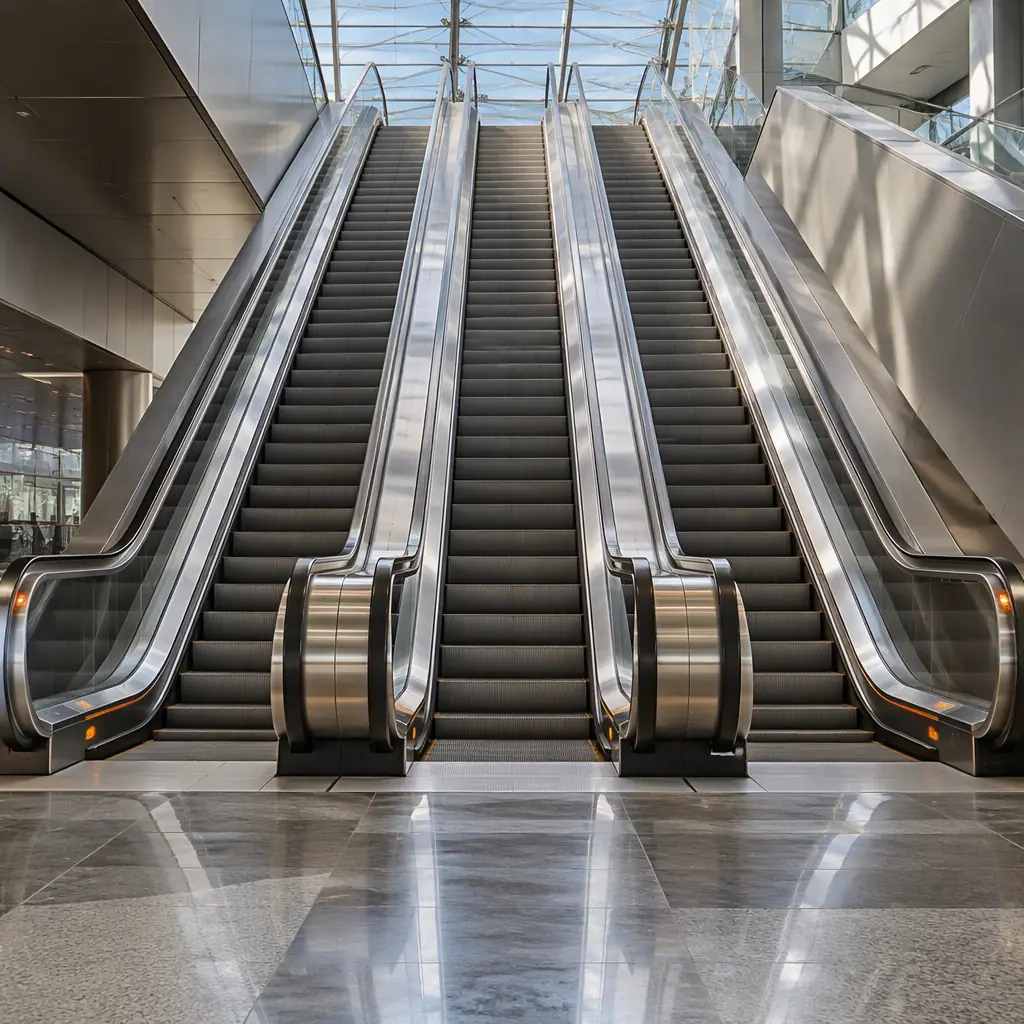
A cleaning fleet quote is usually built from a floor plan measured in square metres. An escalator bank does not appear on that plan, because its cleaning surface is not a floor, it is a stack of moving treads plus two vertical side panels. When the plan is drawn the bank becomes a gap, and the gap is quietly handed back to a manual crew. The result is a facility that reports 90% floor automation and still runs a full manual shift for a 40-square-metre zone.
The four constraints below are what a robotics vendor is actually being asked to solve. Each has a different answer, and only one of them is a robot problem at all.
Constraint 1, Step Tread Geometry
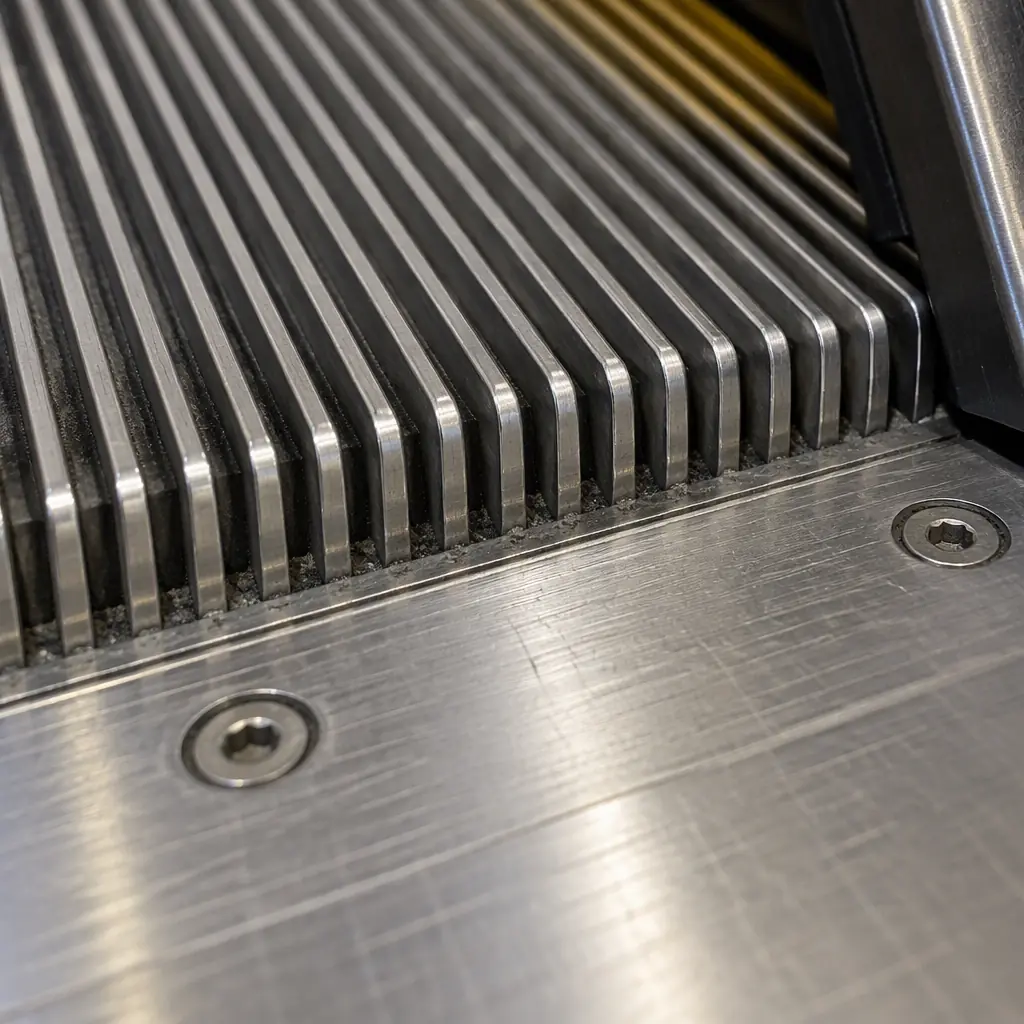
A step tread is not flat. It has a horizontal walking surface, a vertical riser, and a comb-plate entry at each end. Grime accumulates in the angle where the tread meets the riser, and in the machined grooves of the tread itself. A flat rotary pad skims the top surface and leaves the groove depth untouched, which is exactly where the black line forms first.
Measured on a standard 1,000 mm-wide transit escalator, one step presents roughly 0.4 square metres of cleanable area across tread and riser. A typical commercial bank has 60 to 80 steps visible on the incline at any moment, and the same steps pass the landing every few minutes. That circulation is an asset: a stationary robot at the landing can clean every step in the loop without ever climbing.
Constraint 2, Comb Plate and Landing Access
The landing area, the flat run of steps before they descend, is the only place a robot can physically stand next to a step. It is also the most congested part of the zone. Comb plates, floor plates, handrail entry housings and traffic-management bollards frame a working envelope that is often under 1,500 mm deep.
This is where the design decisions split. A robot that occupies the landing blocks the bank and cannot be used during service hours. A robot that operates from a side aisle reaches only the outer lane. The practical arrangement for most facilities is a docking point at the top or bottom landing, deployed in a short dedicated window, with the bank stopped and the comb plate covered.
Constraint 3, Balustrade and Skirt Panels
The balustrade interior, the glass or metal side panel facing the steps, is the most visible surface in the whole zone. It takes hand contact all day and shows every mark. The exterior panelling and the skirt brush line, where the step meets the side, collect fine grit that works into the mechanism.
Wiping the interior balustrade requires a tool that follows a continuous vertical face alongside a moving stair. That is a genuinely different motion from floor scrubbing, and it is the point at which most general-purpose cleaning robots stop. Where a facility has both floor and balustrade surfaces to cover, the honest answer is a robot for the floor run and a hand tool for the glass, with the split written into the schedule rather than left to the operator.
Constraint 4, The Cleaning Window Follows Traffic, Not the Clock
An office floor can be cleaned at night because nobody uses it at night. A transit escalator bank has no such window. At a busy station the bank carries passengers from first service to last, and the short gaps between train arrivals are minutes, not hours.
This is the constraint that decides whether the zone is automatable at all. Three workable patterns exist:
- Stopped-bank window. The bank is taken out of service for a defined period, typically 20 to 40 minutes, and cleaned end to end. Highest quality, lowest frequency, requires a maintenance schedule agreement with the escalator owner.
- Rolling lane closure. On multi-lane banks, one lane is closed while the others run. Doubles the cleaning frequency and halves the disruption, but only works where the bank has spare capacity.
- Continuous tread pass. A robot at the landing cleans each step as it circulates, without stopping the bank. Lowest disruption, but restricts work to treads and cannot touch the balustrade.
Each pattern maps to a different cleaning frequency and a different cost. Choosing one is a facility decision before it is a technology decision.
Comparing a Manual Shift Against an Automated Zone
An escalator bank is usually folded into a general cleaning contract at a blended hourly rate, so its true cost is invisible. Pulled out and priced on its own, the numbers look like this for a mid-size bank in a commercial or transit building:
| Cost element | Manual dedicated shift | Robot-assisted zone |
|---|---|---|
| Labour, per bank per year | 260 to 420 hours | 70 to 120 hours (supervisor plus intervention) |
| Consumables and chemistry | Baseline | Baseline, plus brush and pad replacement |
| Equipment | Hand tools, wet vacuum | Robot lease or purchase, depreciation |
| Escalator downtime required | None, worked around traffic | 20 to 40 minutes per stopped-bank window |
| Balustrade coverage | Full | Manual, or glass-specific tool by hand |
| Consistency of result | Varies by operator and shift | Repeatable on treads, not on glass |
The pattern is consistent across projects. Automation recovers labour on the tread run and does not eliminate the manual element on glass and skirt. A facility that assumes full automation of the zone will overstate the saving by 30 to 40%.
What to Put in the Specification
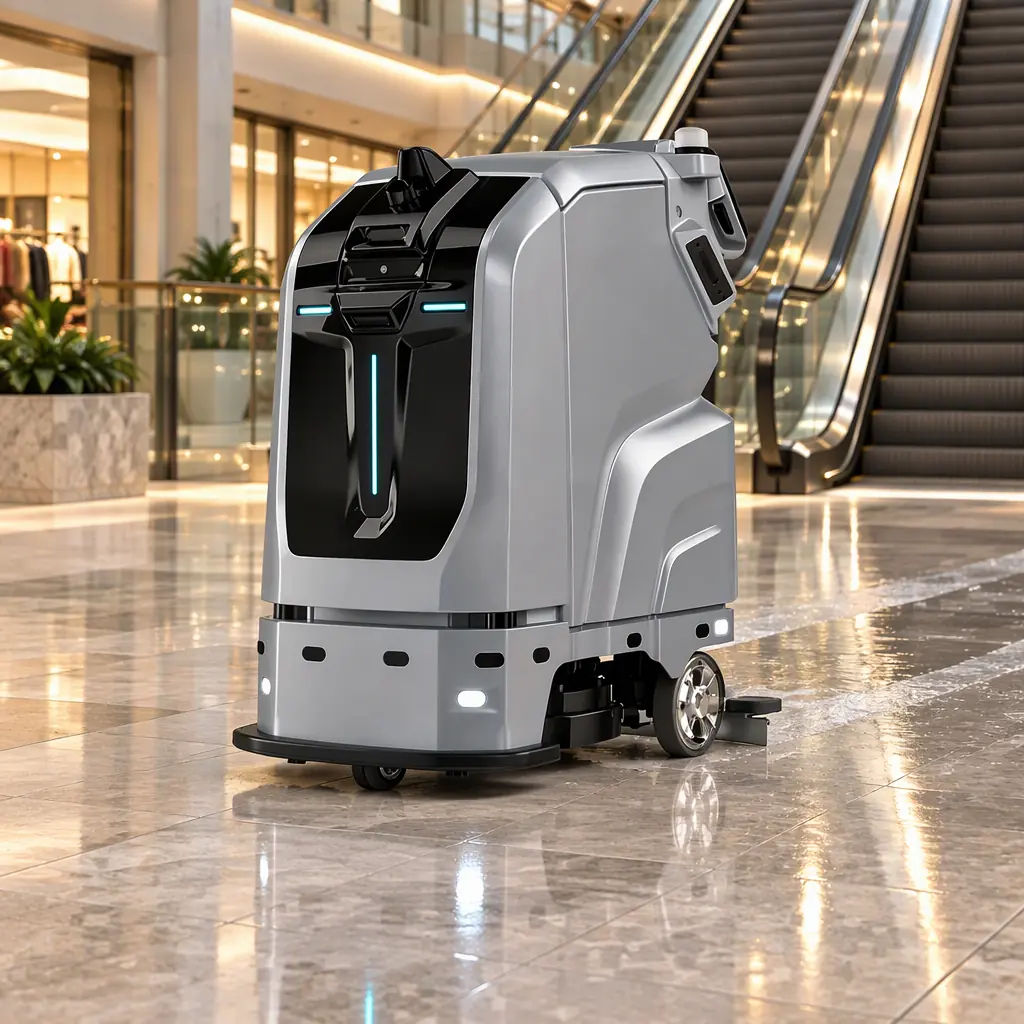
Because the zone is unusual, a generic cleaning-robot specification will not describe it. The following clauses force the vendor to answer the geometry questions before contract:
- State the cleanable surface area of the bank separately from the floor area, in square metres of tread and riser. This stops the bank being omitted from the coverage calculation.
- Define the three access surfaces explicitly, tread and riser, interior balustrade, skirt and exterior panel, and require a written statement of which the system covers and which remain manual.
- Fix the cleaning window pattern as stopped-bank, rolling lane or continuous tread pass, and require the vendor to state the minimum window their system needs.
- Require a trial on one bank before fleet commitment. Geometry varies between manufacturers and a system that works on one escalator may not fit the next.
- Ask for the escape and safety behaviour in writing. A robot working near a stopped escalator, a comb plate and a handrail entry has to be described as a safety case, not a cleaning feature.
The Takeaway
Escalator and moving walkway cleaning is a small zone with an outsized effect on how automated a facility actually is. The tread run is reachable, repeatable and worth automating. The balustrade and skirt usually are not, and pretending otherwise is where the business case breaks. Price the zone separately, specify the access surfaces, and choose the cleaning window deliberately. Done that way, the bank stops being the exception in the plan and becomes a measured line in it.