UV-C Disinfection Robots, Dose, Shadowing and What the Claims Actually Mean
At a glance: UV-C disinfection robots generate more misleading marketing than any other category in facilities automation, because a log-reduction number means nothing without the distance, the run time and the surface it was measured on. This guide lays out the dose equation in plain terms, explains why shadowed surfaces survive the pass, gives the room turnaround arithmetic, and places UV-C honestly inside a cleaning programme rather than on top of it.
UV-C Is a Dose Problem
Ultraviolet light in the UV-C band inactivates microorganisms by damaging their nucleic acids, and the damage is a function of accumulated dose. Dose is not the lamp's output. It is the product of the irradiance reaching a surface and the time that surface is exposed to it.
UV-C dose (mJ/cm²) = irradiance at the surface (mW/cm²) × exposure time (seconds)
Two consequences follow immediately from that equation. First, dose falls with distance, so a surface two metres from the lamp receives a small fraction of the dose a surface half a metre away receives. Second, the required dose differs by target organism, and a figure quoted against one organism tells you nothing about performance against another. A claim of "99.9 percent" without naming the organism, the distance and the run time is not a specification, it is a slogan.
How the Log-Reduction Claims Are Built
Disinfection performance is normally expressed as log reduction, where each log is a tenfold decrease in viable organisms. The table below shows what those numbers mean in practice, because the difference between 2-log and 4-log is the difference between a supplementary measure and a primary one.
| Claim | Reduction | Typical dose band (mJ/cm²) | What it means operationally |
|---|---|---|---|
| 1-log | 90% | 5 to 15 | Marginal, not a meaningful disinfection step |
| 2-log | 99% | 15 to 40 | Supplementary to manual cleaning only |
| 3-log | 99.9% | 40 to 80 | Common target for vegetative bacteria |
| 4-log | 99.99% | 80 to 200 | Higher-assurance environments, longer runs |
| Spore target | varies | often 200+ | Spores need far more dose than vegetative cells |
The dose band depends on the organism and the surface. A quoted 3-log figure measured on a smooth stainless coupon at close range should never be assumed to hold on a fabric-covered chair across the room. When you evaluate a system, ask three questions in this order: which organism, what distance, and what run time. The answer to all three together is the only number worth comparing between vendors.
Shadowing Is Why UV-C Never Works Alone
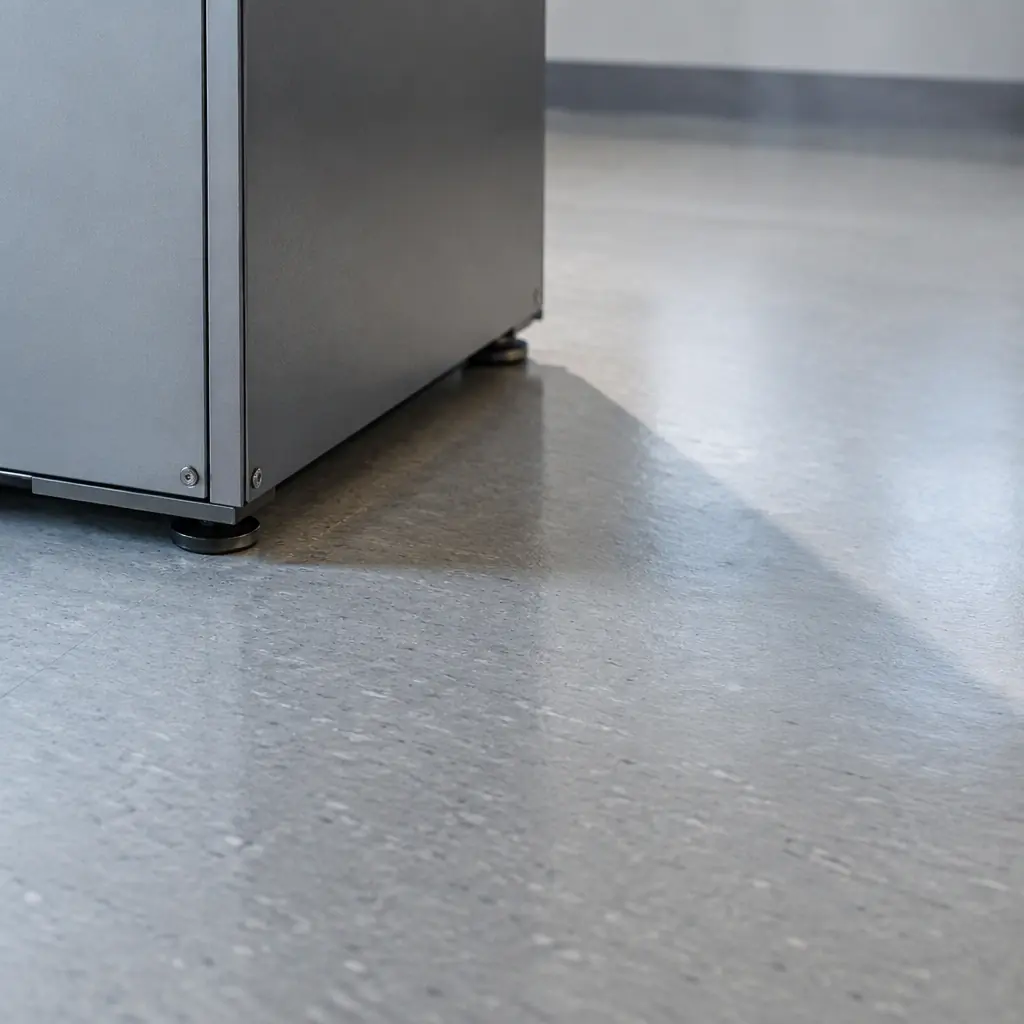
UV-C propagates in straight lines and is blocked by any opaque surface. Every object in a room casts a shadow, and every shadow is a surface that received essentially no dose regardless of how long the run lasted. This is the single most misunderstood property of the technology.
- Under a bed or a table is shadowed from a floor-level emitter and stays contaminated.
- Behind a closed door, in a drawer or inside a cabinet receives no direct light at all.
- On the far side of a chair or equipment trolley from the lamp is in the geometric shadow.
- Rough and porous surfaces harbour organisms in crevices the light cannot reach even when the surface faces the emitter.
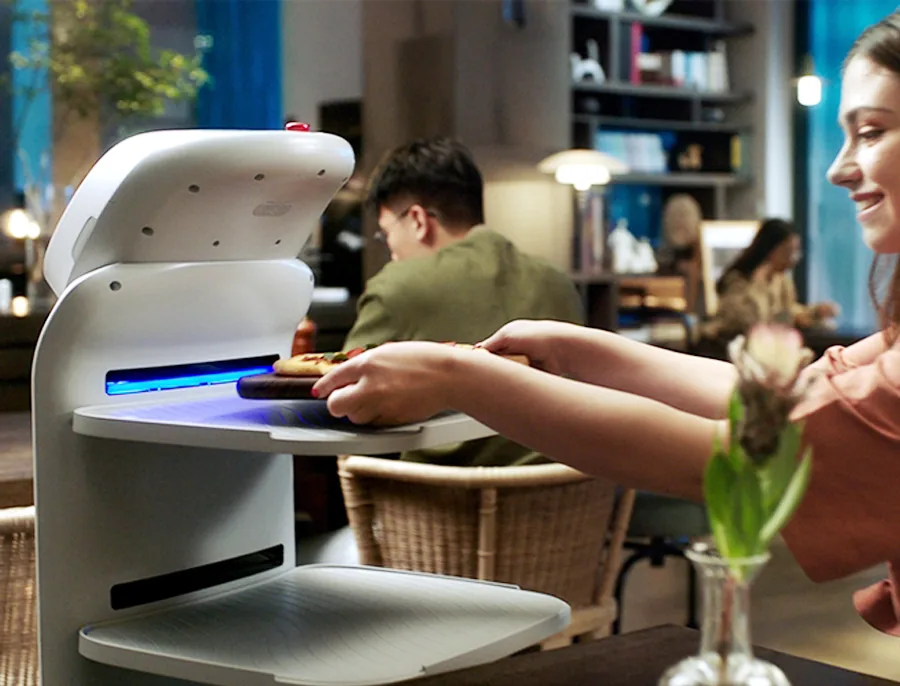
The practical response is not to buy more lamps. It is to combine the treatment with a manual wipe of the shadowed and high-touch points, and to reposition the emitter through the room during the run so the shadow pattern moves. A robot that drives to several positions in one room delivers materially better coverage than a single static emitter, which is the strongest argument for the robot form factor over a fixed wand.
Room Turnaround Arithmetic
The operational cost of UV-C is not the robot, it is the room downtime, because no one can be in the space during the run. The table below gives the arithmetic for a typical patient or guest room and shows why run time, not coverage area, drives the schedule.
| Room type | Positions per run | Run + clearance | Turnaround added | Rooms per hour |
|---|---|---|---|---|
| Small hotel room, 25 m² | 2 | 8 to 12 min | ~10 min | 5 to 6 |
| Hospital single room, 30 m² | 3 | 14 to 20 min | ~17 min | 3 |
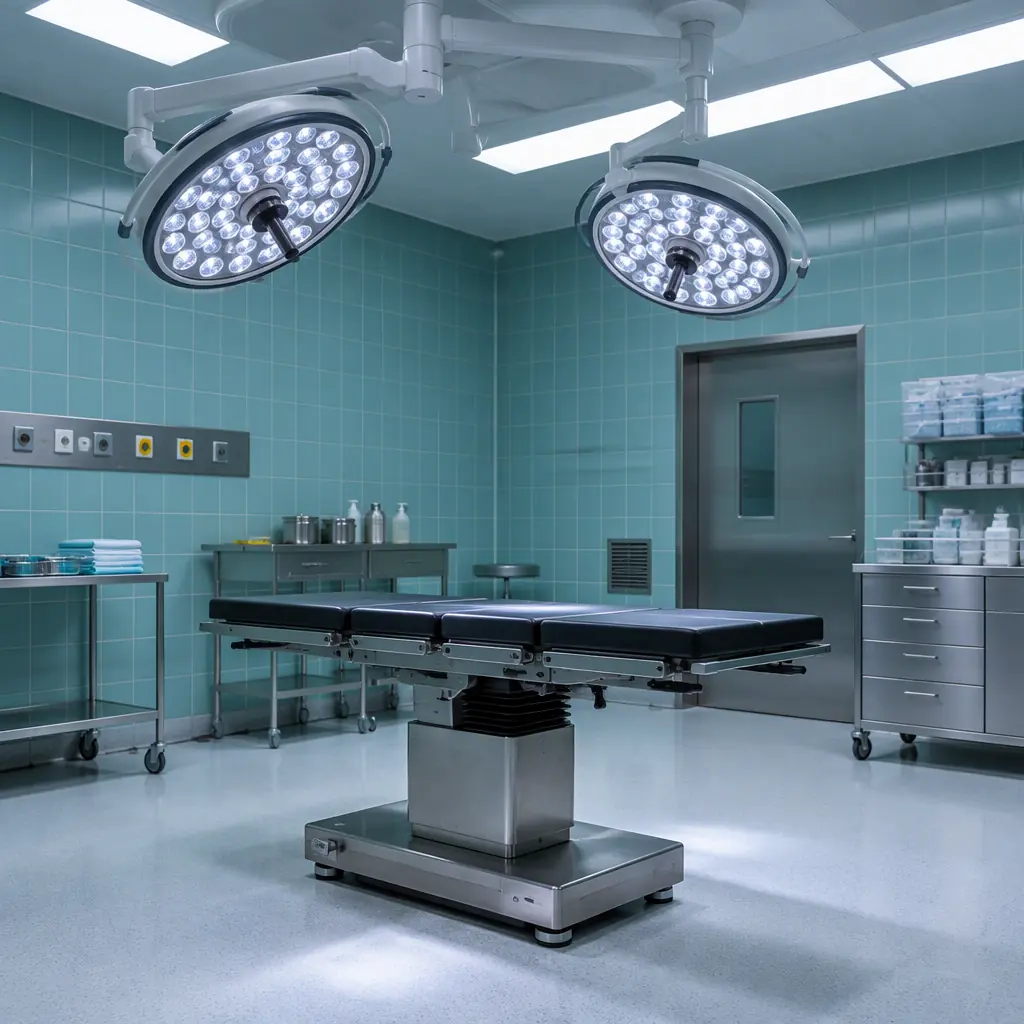
| Operating theatre, 60 m² | 4 to 6 | 25 to 40 min | ~32 min | 1 to 2 |
| Shared ward bay, 80 m² | 5 to 7 | 30 to 45 min | ~38 min | 1 to 2 |
The figure that matters to a facilities director is the turnaround added per room, because that is what competes with bed availability or check-in time. A UV-C pass that adds ten minutes to a hotel turnaround is easy to absorb overnight. One that adds thirty minutes to an operating theatre between cases is a scheduling decision, not a cleaning decision, and has to be justified by the infection risk it addresses.
Safety Interlocks Are Not Optional
UV-C in the germicidal band is hazardous to human eyes and skin, which is why every credible unit carries interlocks that prevent it from running with people present. The practices below are what a compliant installation looks like.
- Presence detection that shuts the emitters off immediately when motion or a door opening is detected, not on a delay.
- Door and access interlocks so the run cannot start against an open room.
- Visible warning indicators outside the room during the run, plus a documented lockout routine for the staff who need to enter.
- Automated run logs recording dose delivered, positions visited and any interruption, which is the only defensible audit evidence after the fact.
If a vendor cannot show you the interlocks and the log format before purchase, that vendor has not deployed in a site with a safety officer, and you do not want to be their first.
Where UV-C Belongs in a Programme
UV-C is a supplementary no-touch step, not a replacement for cleaning. Organisms sitting under a film of soil are protected from UV-C in the way they are not protected from a detergent that removes the film. The correct sequence is always clean first, then treat, and the treatment addresses the organisms the manual pass missed or redistributed, not the visible contamination.
Used that way it earns its place in high-assurance settings, isolation and terminal cleans, food handling areas and anywhere a documented additional reduction is worth the turnaround. Used as a substitute for cleaning it produces a measured dose over a still-dirty surface and a false sense of assurance. For the sites where hygiene compliance is audited, the run logs should sit alongside the cleaning records, and the combination is covered in our guide to inspection and asset audit logging.
The Takeaway
UV-C works, but only at a dose you can compute and only on surfaces the light can reach. Ignore the percentage claims until a vendor gives you the organism, distance and run time, treat shadowed and touch surfaces as manual work regardless of the light, budget for the room downtime rather than the robot, and insist on presence interlocks and run logs. Positioned as a supplementary no-touch step after cleaning, UV-C is a defensible addition to a high-assurance programme. Positioned as a replacement for cleaning, it is an expensive way to measure a dose over dirt.