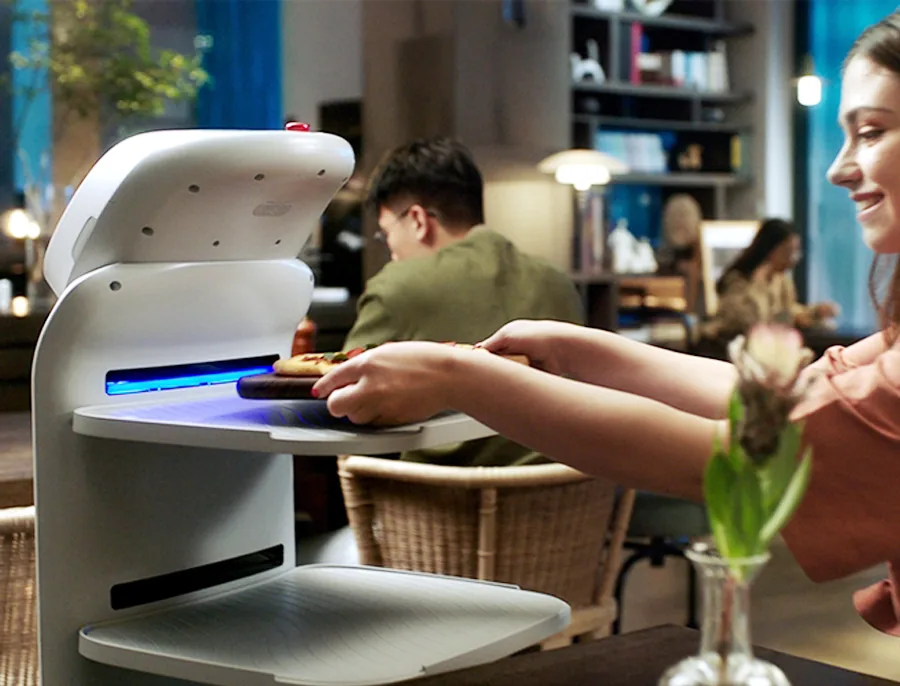
Service Robots for Dental Clinics & Dental Labs, Operatory Cleaning and Clinical Floor Care in 2026
At a glance: A four-operatory dental practice turns each room over eight to ten times a day, and the clinical floor takes a constant load of coolant mist, debris and surface spray that a mop merely smears. This guide covers AOMAN C2 Pro autonomous floor care for operatories, sterilisation and the lab bench, plus AOMAN D1 instrument-cassette and lab-sample transport, with operatory-turnover, infection-control and ROI data for practice owners, group dental operators and dental-lab managers.
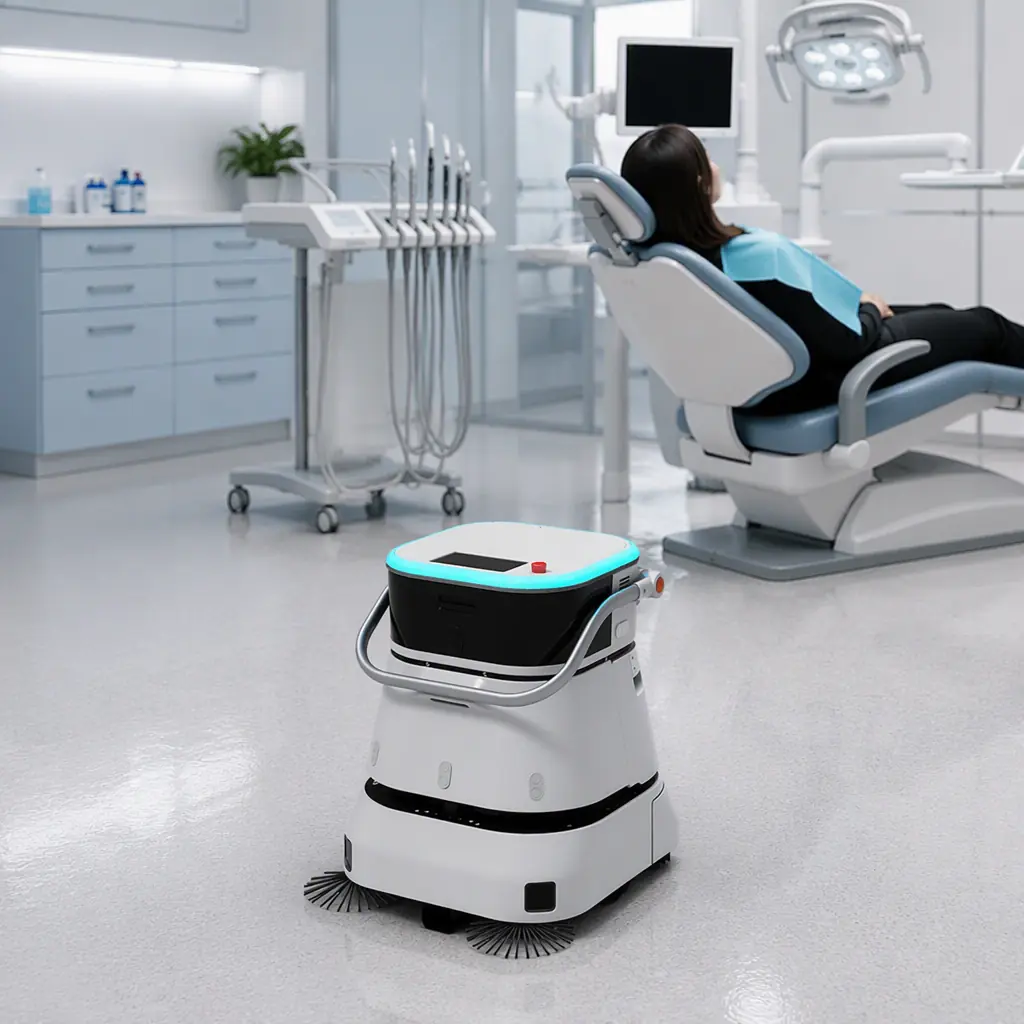
Dental practices are built around speed and turnover, not housekeeping. Between appointments a chairside assistant has minutes to reposition the operatory, and the floor is usually last on the list. Yet it carries a specific clinical load: coolant spray from the handpiece, tooth and amalgam debris, splatters from rinsing, and the fine dust of polishing and airway treatment. Left as a smeared wet surface, that is both an infection-control gap and a constant slip exposure for staff moving around a patient.
Add a busy sterilisation room and a dental lab, and the floor obligations multiply: the lab bench and mill area shed plaster, zirconia dust and resin flash; the sterilisation bay alternates wet floors with hot dry heat; and the instrument cassettes travel from the operatory to the steriliser and back several times a day. Each of those flows can be automated, which is why dental and lab automation is now one of the fastest-growing service-robot niches in healthcare.
Why Dental Practices Automate
Four drivers. First, infection control. A documented, repeatable floor-clean cycle supports the sterilisation and disinfection protocols a practice is audited against. Second, slip and sharps safety. Clinical floors get wet and the practice floor is shared with staff and equipment. Third, staff time. A clinical assistant's hour is far more valuable spent chairside than mopping. Fourth, presentation. The treatment floor is the first thing a patient notices under the operatory light. Each maps onto a robot.
| Zone | Surface & Load | Cleaning Need | AOMAN Fit |
|---|---|---|---|
| Operatory (per chair) | Sealed vinyl, coolant + debris | Per patient turnover | C2 Pro, 440 mm, silent mode |
| Sterilisation / decon bay | Clinical tile, wet + heat | Multiple × daily | C2 Pro, water recovery |
| Dental lab / mill bench | Concrete, plaster + zirconia dust | End of day | C2 Pro, dust pickup |
| Reception & waiting area | Vinyl / tile, foot traffic | 2–3× daily | C2 Pro |
| Corridor / central supply | Vinyl, busy | Daily | C2 Pro |
Operatory Floor Care with the C2 Pro
The AOMAN C2 Pro is the operatory unit. Its 440 mm cleaning width turns a room between patients without a long closed window, and silent mode lets it work between appointments rather than only after hours. A 700 mm under-table clearance reaches beneath the operatory cart and the assistant's handpiece station the way a ride-on cannot, and it covers roughly 4,400 m² per run so a single unit can service a whole floor. For the comparison of scrubbing modes across facility types, see our commercial cleaning robot buyer's guide.
Sterilisation and Decontamination Bay
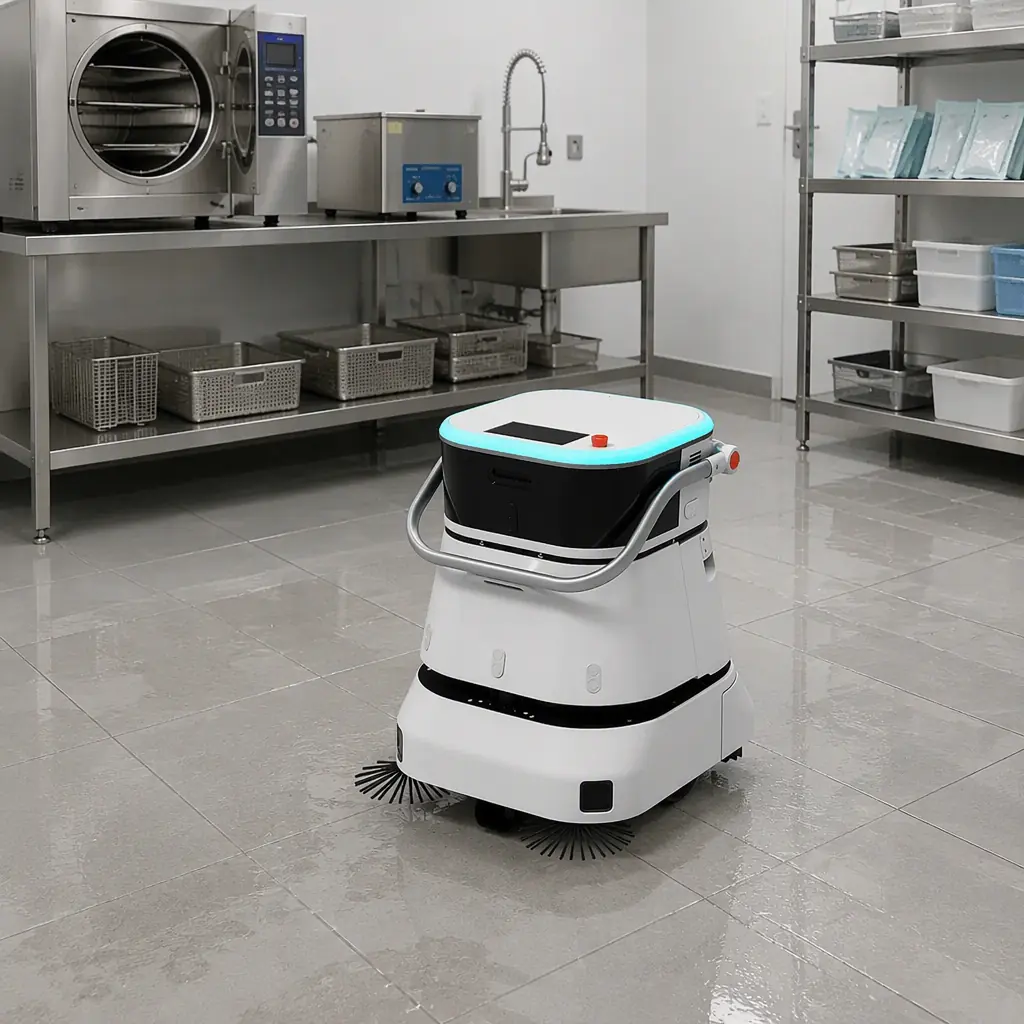
The sterilisation room is the infection-control spine of a practice, and it is wet: instruments are rinsed, cassettes are bagged and run through ultrasonic and autoclave cycles, and the floor holds rinse water and disinfectant. The C2 Pro runs this zone on a repeatable cycle, lifting the rinse water and leaving the surface safe to walk on before the next chair is set. The broader clinical-continuity framing, what happens when a practice's systems fail, is covered in our failure modes and business continuity guide.
Dental Lab and Mill Floor
The dental lab sheds fine debris, plaster, model stone, zirconia dust from the mill and resin flash from the print and cure stations. The C2 Pro picks up the dry fines and the wet polish residue in one pass, and its water-recovery separation means slurry is removed rather than smeared back over the bench floor. Running it at the end of the day leaves the lab clean for the next batch; the standards that govern clinical and lab hygiene are framed in our cleanroom and laboratory guide.
Instrument Cassette and Lab Sample Transport with the D1
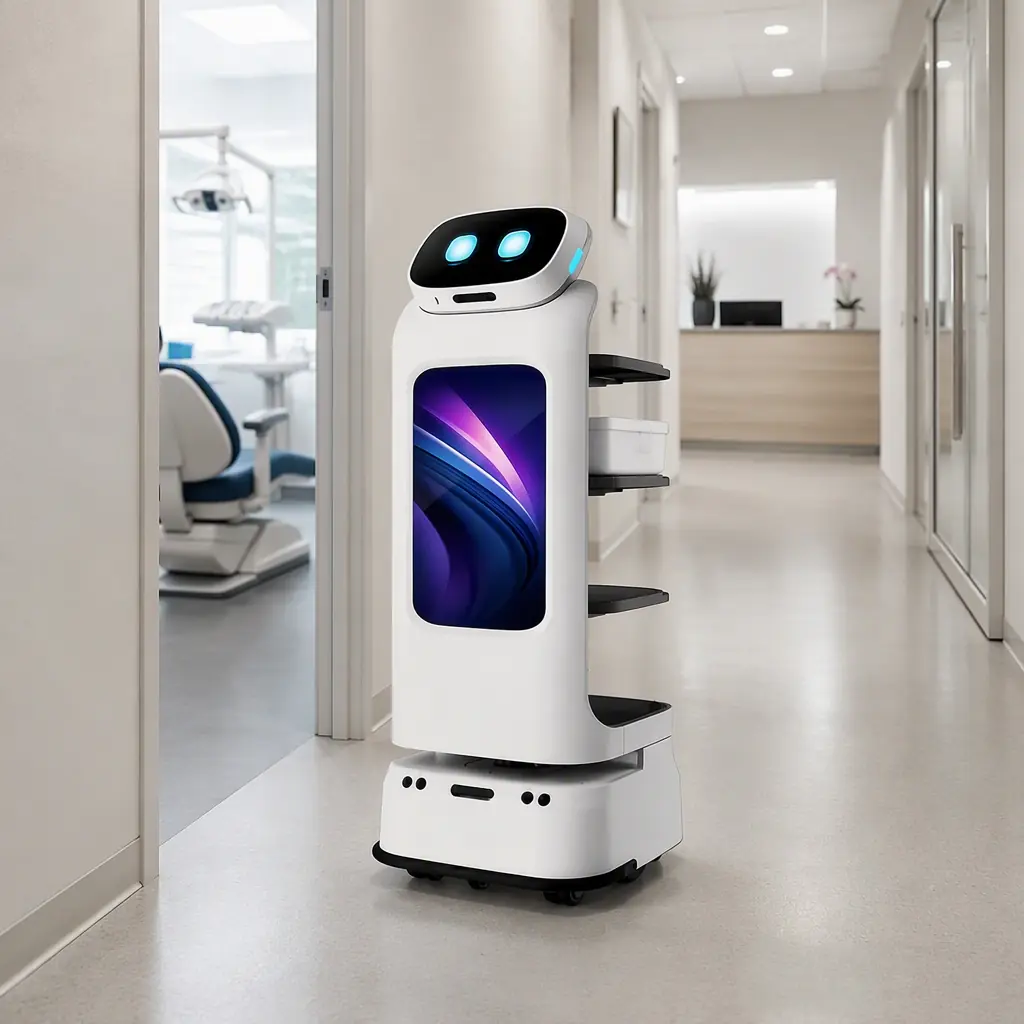
The AOMAN D1 handles the movement side. It carries up to 40 kg across separate trays, so it can move a sealed instrument cassette from the operatory to the sterilisation bay, or a crown and implant case from the lab to the front desk on a fixed, traceable route, without occupying a clinical assistant or blocking a corridor. Because it runs on a schedule and its runs are logged, the transport becomes an audit record rather than a hand-carry. How service robots are reshaping clinical logistics more broadly is covered in our healthcare service robot guide.
Infection Control and Surface Protocol
| Requirement | How AOMAN Robotics Helps |
|---|---|
| Documented floor-clean cycle | Zone-coverage-mapped, timestamped C2 Pro runs |
| Slip & sharps safety | Cleaning between patients, water recovery off the floor |
| Disinfectant compatibility | Wetted materials matched to chairside surface disinfectants |
| Instrument traceability | D1 logged cassette runs between operatory and steriliser |
| Staff protocol | Robot handles the routine floor, assistants stay chairside |
Scheduling Around Appointments
- Run between patients . A quick C2 Pro pass in the dead minute after a patient leaves keeps the operatory ready for the next.
- End-of-day lab clean . Schedule the lab/mill run after the last batch to clear dust and polish residue.
- Deploy overnight charging . Dock the unit so it is ready for the morning set-up.
- Keep spill response manual . Immediate spot care for a live spill; the robot handles the clinical deep clean.
For the wider staffing and change-management picture of running robots alongside a lean clinical team, our change management guide is the reference.
Build-Out by Practice Size
- Two-to-four operatory practice: one C2 Pro for operatories and sterilisation, one D1 for cassette transport. A defensible first purchase.
- Group practice (8+ chairs) or multi-site: a C2 Pro per floor cluster, a D1 per transport route, coordinated through the fleet platform per the fleet management guide.
- Dental lab / crown & bridge: one C2 Pro for the mill and bench floor, one D1 for case tracking.
What to Verify Before Signing
Chair-side clearance . Measure the pass between the operatory cart, the delivery cart and the chair base, not the room centre; the C2 Pro needs 85 cm. Chemical compatibility . Confirm wetted materials against your surface disinfectant list. Floor seam and threshold . Check the unit handles the vinyl seams and low thresholds between operatories. Corridor width . A single-wide internal corridor must let the robot pass and still leave room for a stretcher. Quiet operation . Confirm silent mode is quiet enough to run with a patient chairside.
The ROI Picture
An illustrative four-operatory practice spending about $31,000 a year on clinical floor cleaning plus assistant time diverted to mopping, the equivalent of roughly a part-time aid and contract cleaning, could trade that against a C2 Pro + D1 fleet and keep headroom, while removing a real infection-control and slip exposure and keeping each operatory ready for the next patient. Model it on your own chair count and turnover: the recovered clinical-assistant time is the payroll-side saving, and reduced slip risk, better audit posture and faster turnover are the secondary wins that push payback under 18 months. For the ongoing parts-and-service cost, the maintenance and total cost of ownership guide covers what a floor-care machine costs to keep running.
Ordering matters. The operatory floor first, it is the infection-control, slip-safety and turnover win. Cassette and lab transport second, it frees clinical time and adds traceability. Tell us your chair count, lab layout and sterilisation setup, request pricing on a dental robotics fleet and we will match unit types and cleaning cycles to your practice within 24 hours.