A 27-hole private country club in the Southeast US maintains 214 acres of turf, 11 miles of cart paths, a 3,200-space parking operation across four lots, and a 48,000-square-foot clubhouse with two dining rooms, a pool complex, and an events calendar that books 140 functions per year. The club's general manager runs a maintenance crew of 19 in season (April-October) and 9 in winter, and a clubhouse staff of 41 that peaks at 68 during tournament weekends. The two numbers that keep the GM up at night come from the club's own time studies: grounds staff spend 31% of daylight hours on non-turf tasks — sweeping cart paths, blowing parking lots, cleaning the pool deck — and the clubhouse lost $38,000 in 2025 to service delays during member-guest events, measured as comped meals and dining-room credit issued after wait-time complaints.
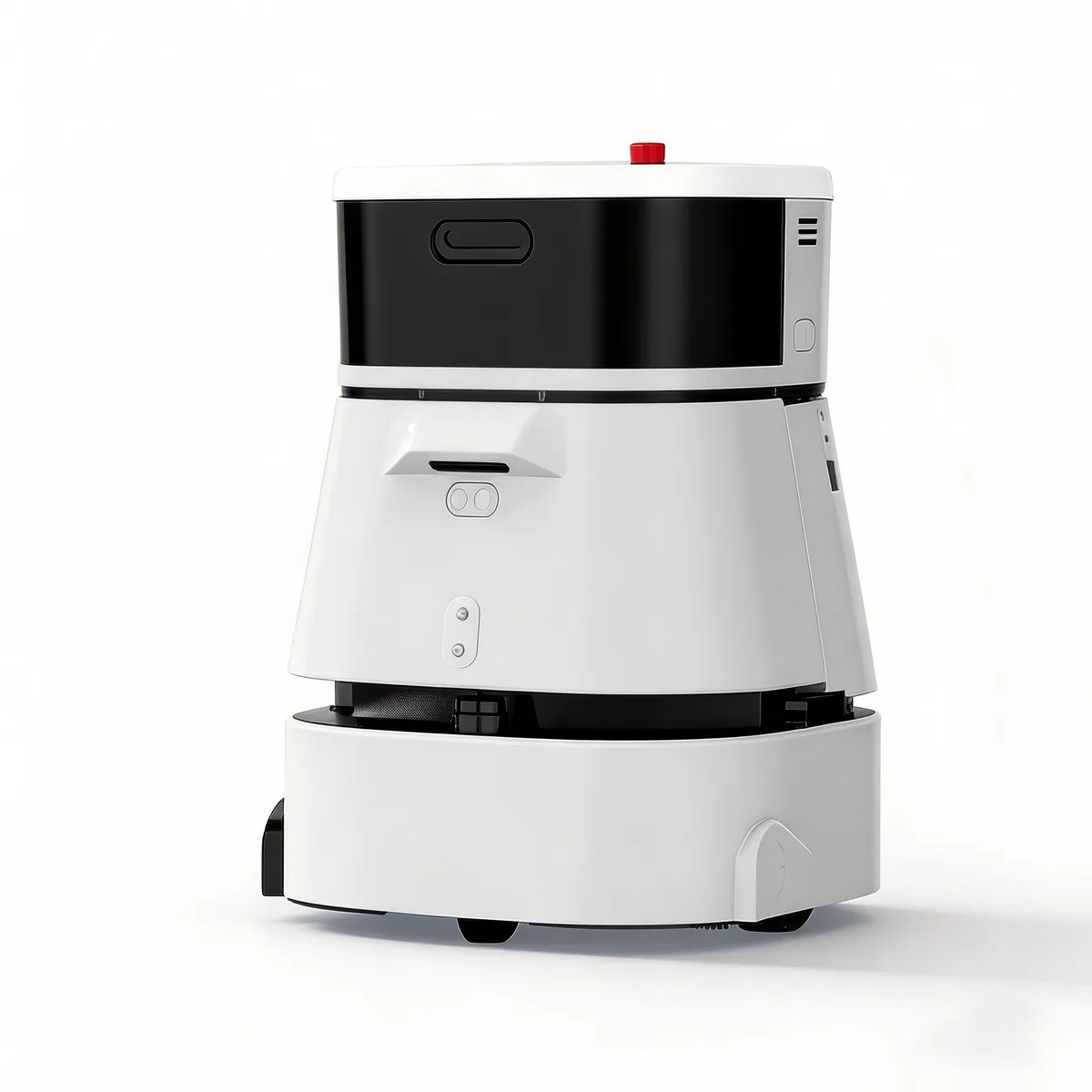
In early 2026, the club deployed CLEINBOT CC201 outdoor sweepers across the cart path network, parking lots, and pool deck; CRUZR humanoid concierge robots at the clubhouse entrance and the events registration desk; and CADEBOT L100 delivery robots for patio and poolside food-and-beverage service. The maintenance superintendent's summary after six months: "We stopped hiring for the jobs nobody wants, and the jobs people want got easier."
The Maintenance Labor Crisis: 31% of Daylight Hours on Non-Turf Tasks
The Golf Course Superintendents Association of America (GCSAA) 2025 compensation and benefits report documents what every club GM already knows: the maintenance labor market is structurally short. Median superintendent tenure is stable, but assistant superintendent and equipment technician positions show a 22% unfilled rate entering the 2026 season, and seasonal groundskeeper positions — the entry-level roles that historically filled cart-path and parking-lot work — turn over at 48% per season. The same dynamic that drives ski resort staffing strategies applies on a golf course: the work is seasonal, weather-dependent, and physically punishing, so the labor pool shrinks every year.
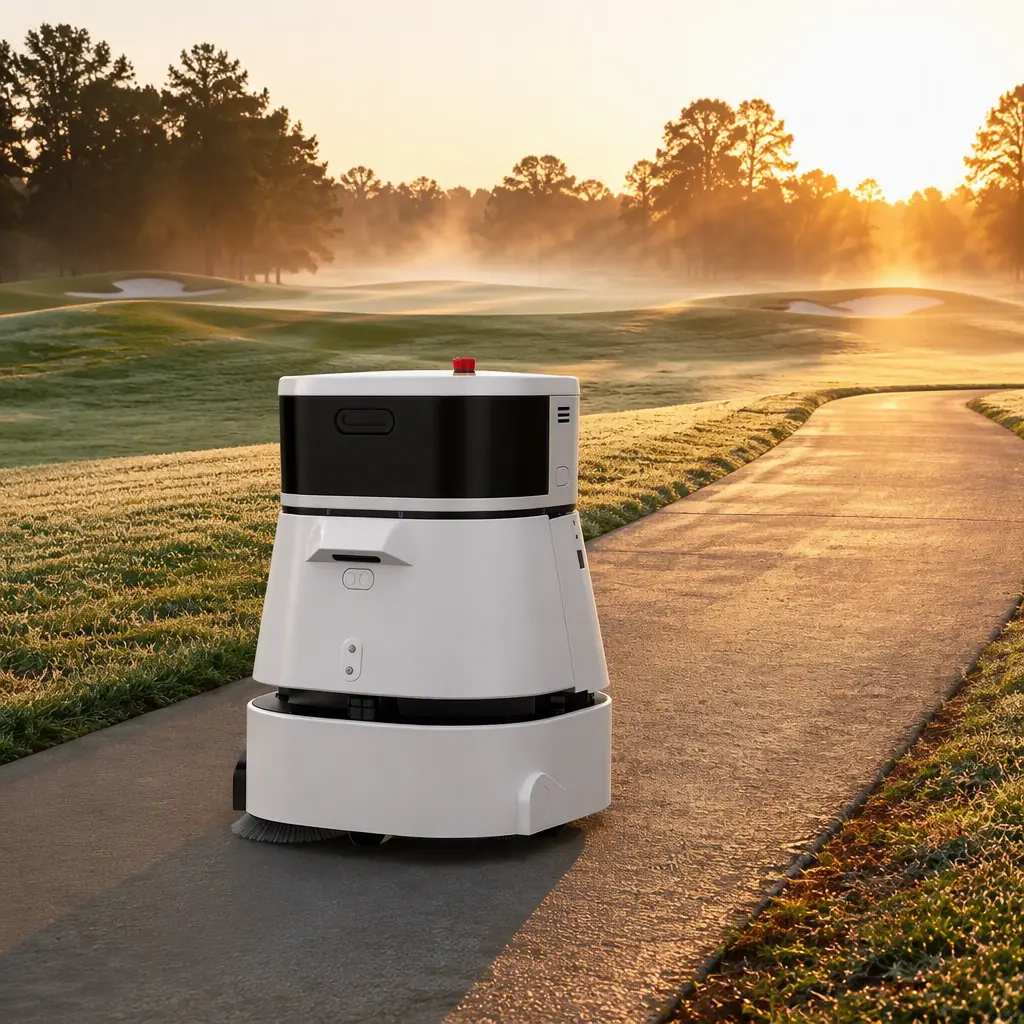
The cost structure makes the robot decision arithmetic rather than philosophy. A seasonal groundskeeper in a top-10 golf state costs $17-22/hour fully loaded, and the club's own time study measured 4.2 hours per day of cart-path sweeping and blowing during the high-play season (leaf season adds 6+ hours). That is $35,000-48,000 per year of labor applied to sweeping — before the rework cost of paths that failed the morning presentation standard anyway. CLEINBOT CC201 covers the same 11-mile path network on a programmed night schedule: its 3,000 m²/hour cleaning efficiency and 1,020 mm sweeping width clear the full network in under three hours, its 130L auto-emptying dust bin handles a full shift without intervention, and its IP67 enclosure and -10°C to 50°C operating range mean the sweeping happens regardless of dew, rain, or the 6 AM frost the grounds crew is busy protecting greens from. The robot's GPS + LiDAR + IMU fusion navigation handles the 8° slope sections and the narrow bridge transitions on the path network — the two areas where manual blowing historically gets skipped.
Curb Appeal Is a Revenue Metric: Parking Lots and the First Impression Standard
Country club research consistently shows that first impressions drive membership acquisition. The Club Leaders Forum 2025 member-acquisition study found that 63% of prospective members cite "facility presentation" — the drive-in view, parking area, and entry landscaping — as a top-3 factor in their decision, ahead of initiation-fee structure (58%) and even dining quality (52%). For daily-fee and resort courses, the same logic applies to Google reviews: a 2025 review-analysis of 2,400 US golf facilities found that "clean parking area" and "well-kept grounds" appear in the positive-review vocabulary 3.4x more often than any other facility attribute, and negative reviews citing "unkempt" conditions correlate with a 0.4-star average rating penalty.
Parking is the highest-exposure, lowest-skill surface on the property, which makes it the ideal first robot deployment. A 3,200-space lot complex accumulates leaves, sand tracked from the course, and trash from tournament tailgating — and it is exposed to weather 24/7. CC201's sealed 130L dust container and HEPA PM2.5 filtration handle the leaf load that chokes standard blower-based approaches, while its rain sensor automatically adjusts routes to avoid puddle buildup during the afternoon thunderstorms that hit most southeastern clubs daily from June through August. The same units rotate to the pool deck and the practice facility parking during shoulder seasons, giving a three-robot CC201 fleet year-round utilization instead of seasonal peaks.
For multi-property operators — the resort groups and management companies running 5-40 courses — the multi-site deployment strategy guide covers the phased rollout pattern, and the fleet management platform lets a regional director monitor sweeping completion across every property from one dashboard, flagging the course whose CC201 completed 18% fewer cycles than its sister property before it becomes a visible presentation problem.

The Clubhouse Concierge: Check-In, Event Registration, and the 41,000-Activity Golf Club
The private club hospitality model is a hybrid of hotel and event venue. Members expect the recognition of a hotel loyalty program; tournament and event guests expect the throughput of a conference registration desk. On a member-guest weekend, a clubhouse can process 300-500 event check-ins in a three-hour window while the dining team simultaneously seats 180 members for lunch. The front-of-house team cannot be in three places at once — the historical answer was to pull staff from the dining room, which created the $38,000 service-delay cost the GM quantified.
CRUZR's parallel-processing model — the same architecture deployed in corporate lobby reception and bank branch guidance — places one unit at the events registration desk and one at the main clubhouse entrance. Each unit handles the three most repetitive guest interactions: confirming event registration and printing name badges (via its 8-inch chest screen and the club's registration API), answering the 12 most common orientation questions ("Where is the grill? What time is the shotgun start? Is the pool open to guests?"), and wayfinding to the locker rooms, dining rooms, and practice facilities. The 1,450 mm humanoid form factor with its 14-inch facial LED array and 36-expression emotional display carries the club's service brand in a way a kiosk cannot — which matters in an environment where members' spouses and guests judge the club's service culture. Its 50+ language support covers the international member base that many private clubs now serve.
The member-engagement dimension matters for retention. Club membership committees evaluate "service culture" through guest feedback, and CRUZR's face recognition (0.3-second match, 7-category emotion detection) lets the robot greet returning members by name and surface their standing preferences — locker assignment, preferred dining area, regular beverage order — to the human staff via the fleet dashboard. This is the same personalization dynamic that drives adoption in casino and integrated resort environments, where recognition-based service is a direct revenue lever.
Patio, Pool, and Beverage Service: CADEBOT L100 on the Food-and-Beverage Floor
Club food-and-beverage operations carry a unique service pattern: a member base that expects prompt poolside and patio service during a compressed 11 AM-6 PM window, served across a geographically spread floor that includes the main dining room, the grill, the pool deck, and the 19th hole patio. The Club Managers Association of America (CMAA) benchmark for food-and-beverage labor cost at private clubs is 32-38% of F&B revenue — and clubs in the bottom quartile on labor efficiency consistently show the same pattern: 20-25% of server walking time spent on non-customer tasks like running food to the pass, clearing the patio, and restocking the pool bar.
CADEBOT L100's four-tray configuration (15 kg per tray, 60 kg payload, 13.3-inch touchscreen) adapts to three distinct club workflows. On the pool deck, it shuttles beverages and snack orders from the pool bar to the chair-side service point, cutting the average poolside order delivery time from 14 minutes to 6 minutes in the club's trial — the same delivery dynamic documented in restaurant and food service deployments, where robots reduce staff walking distance by up to 70%. At the 19th hole, it clears glassware and plates in continuous loops, keeping the patio presentable without pulling the grill line. In the events operation, it transports place settings and AV equipment between the banquet kitchen and the ballroom — a task that traditionally consumed two banquet staff for the full setup window.
Seasonal Deployment: Weatherizing the Off-Season
The golf robot fleet faces a problem the hospitality robots do not: what happens between November and March. The answer is a three-part off-season strategy. First, indoor redeployment: CC201 units move to covered storage or, where the club owns indoor practice facilities, run reduced schedules on the indoor turf and cart barn floors; CRUZR units continue full-time clubhouse duty year-round (holiday events, New Year's galas, and the winter dining season are all peak clubhouse periods); CADEBOT L100 continues patio service under the covered veranda. Second, maintenance windows: the maintenance and TCO guide schedules the annual deep-service — battery health checks, brush deck inspection, sensor recalibration — during the off-season when utilization is lowest, exactly the pattern industrial laundry operators use for their seasonal demand curves. Third, fleet rightsizing: the RaaS financing models and budget planning frameworks allow clubs to structure seasonal subscription tiers, paying for the full fleet only during the March-October operating season.
The deployment sequence matters. Clubs that start with parking-lot sweeping (lowest risk, highest visibility) build the maintenance crew's trust in the technology before introducing the CC201 units to the cart-path network, and they run the clubhouse robots only after the front-of-house team sees the delivery robots succeed on the pool deck. The change management playbook covers the staff-integration dynamics — the maintenance crews that initially feared the robots would cut hours are the same crews that now rely on them during leaf season, and the staff training and certification guide provides the internal certification structure that turns two grounds staff into the club's robot operators. The safety standards compliance guide covers the ISO 3691-4 and ANSI/RIA R15.08 requirements for autonomous mobile robots sharing space with golf carts and pedestrians — the reason the CC201's 180° obstacle detection at up to 15 meters and automatic speed reduction near pedestrians are non-negotiable on a course where members drive carts past working robots daily.
The golf club is a 250-acre facility with a five-star service standard and a seasonal labor pool — the sharpest version of the hospitality-automation tension in the industry. The clubs winning the membership war in 2026 are the ones treating robot deployment as facility infrastructure rather than novelty: sweepers that run while the course sleeps, concierges that never take a lunch break during a member-guest weekend, and delivery robots that keep the pool deck presentable at 2 PM on the hottest Saturday of July.