Service Robots for Ghost Kitchens & Cloud Kitchens, Order Fulfillment and Floor Sanitation in 2026
At a glance: A 12-rack cloud kitchen runs three or four virtual brands in one footprint and sends hundreds of orders a day out a single handoff door, a rush that strains both the order-flow and the prep floor. This guide covers AOMAN D1 autonomous order delivery from the prep rack to the pickup handoff, and AOMAN C2 Pro floor sanitation of the prep and menu-only kitchen floor, with order-volume, hygiene and ROI data for ghost-kitchen operators, franchisees and commissary managers.
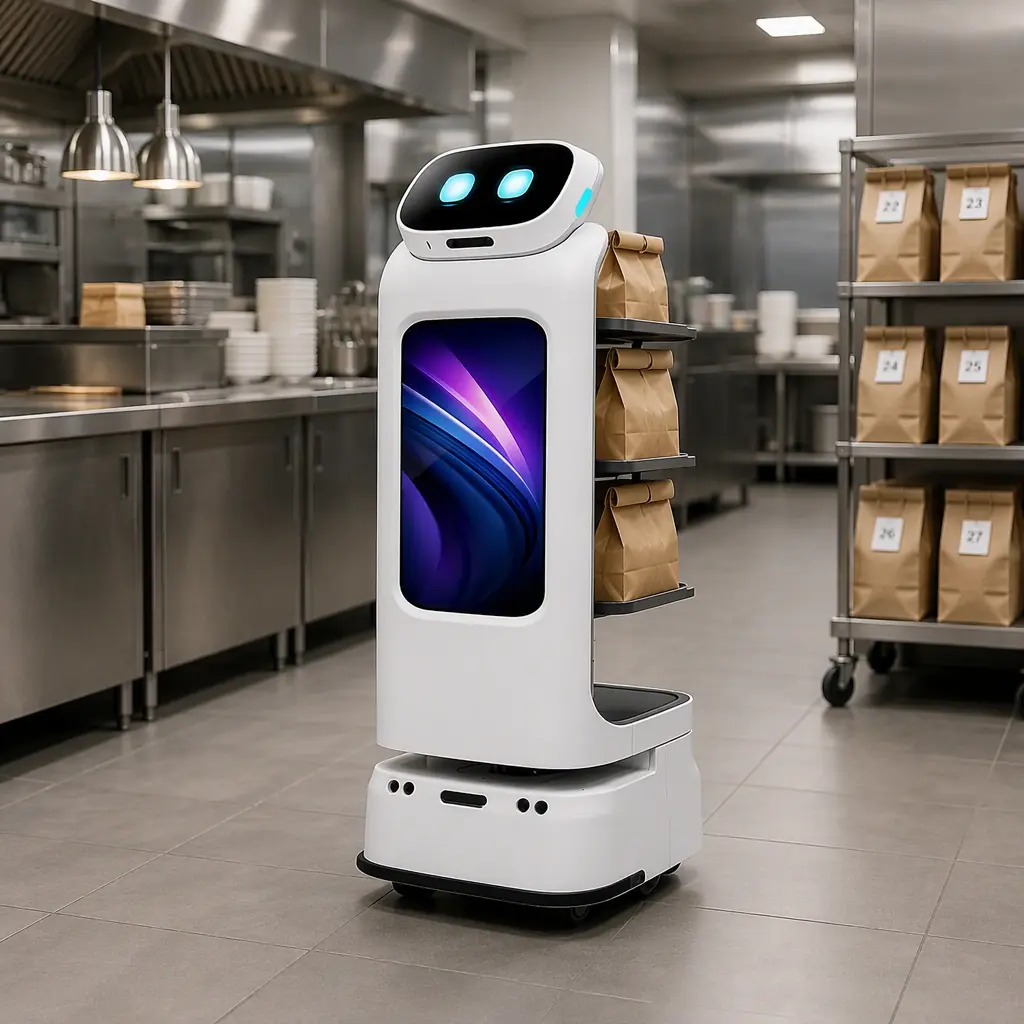
A ghost kitchen is a kitchen without a dining room, and everything that is invisible in a normal restaurant becomes structural. There is no waiter or busser to carry a plate, the order moves from the prep station to the pick-up shelf and out the door, several hundred times a day in a high-volume commissary. There is no front-of-house to blame for a mess. The prep floor is the whole show, and it takes a constant load of oil spray, salt, flour and sauce drips that a mop smears into a hazard. And there is no customer to shrug at a slow handoff. A cold or missing order is a one-star review no kitchen can undo.
The trade-off is that a ghost kitchen is also the cleanest service-robot use case in food service: a fixed, short, high-frequency run from prep to handoff, and a floor that needs cleaning on a cycle, not a chore list. Both are exactly what automation is built for.
Why Ghost Kitchens Automate
Four drivers. First, order accuracy and speed, a mis-routed or delayed handoff loses a delivery window. Second, floor safety and hygiene. A greasy prep floor is a slip and a health-code issue. Third, labour scarcity. Kitchen staff are hard to find and harder to keep on the 5 AM to 11 PM cycle. Fourth, multi-brand complexity, with several virtual brands sharing one footprint, moving orders to the right bag-rack and the right handoff without cross-contamination matters. Each maps onto a robot.
| Zone | Surface & Load | Cleaning Need | AOMAN Fit |
|---|---|---|---|
| Prep & cook line | Commercial tile, grease + salt | Per shift + mid-service | C2 Pro, degreaser compatible |
| Order staging / bag rack | Quarry tile, drips | Continuous | D1, scheduled bag runs |
| Handoff / driver pickup | Tile, foot traffic | 2–3× daily | C2 Pro |
| Walk-in cold / freezer floor | Concrete, condensation + ice | Daily, low-temp | C2 Pro, water recovery |
| Dish / soak bay | Quarry tile, wet + slip | Per shift | C2 Pro |
For the wider comparison of cleaning modes and floors across food-service settings, see our commercial cleaning robot buyer's guide.
Order Delivery from Prep to Handoff with the D1
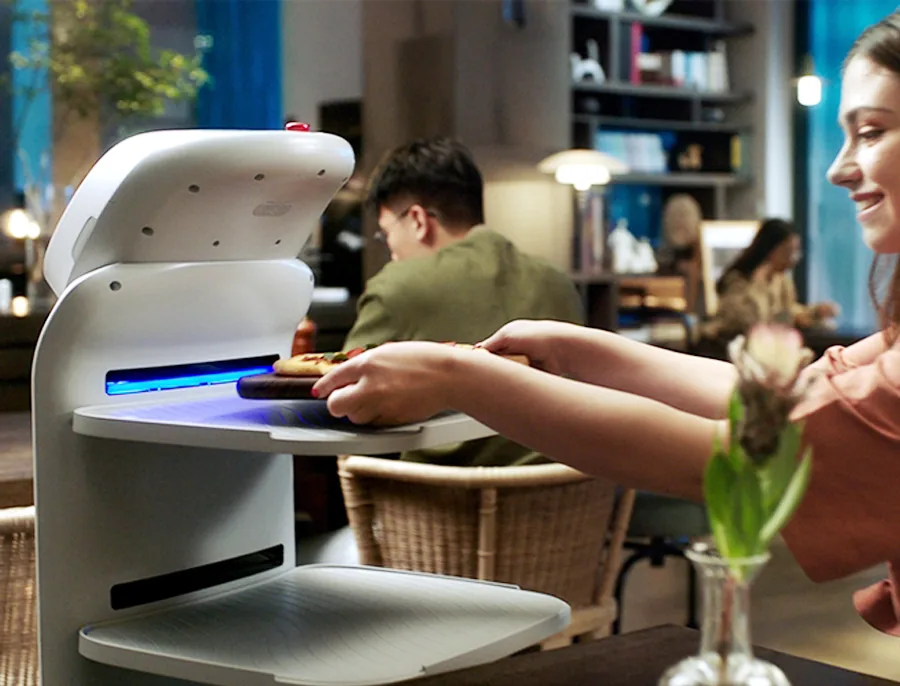
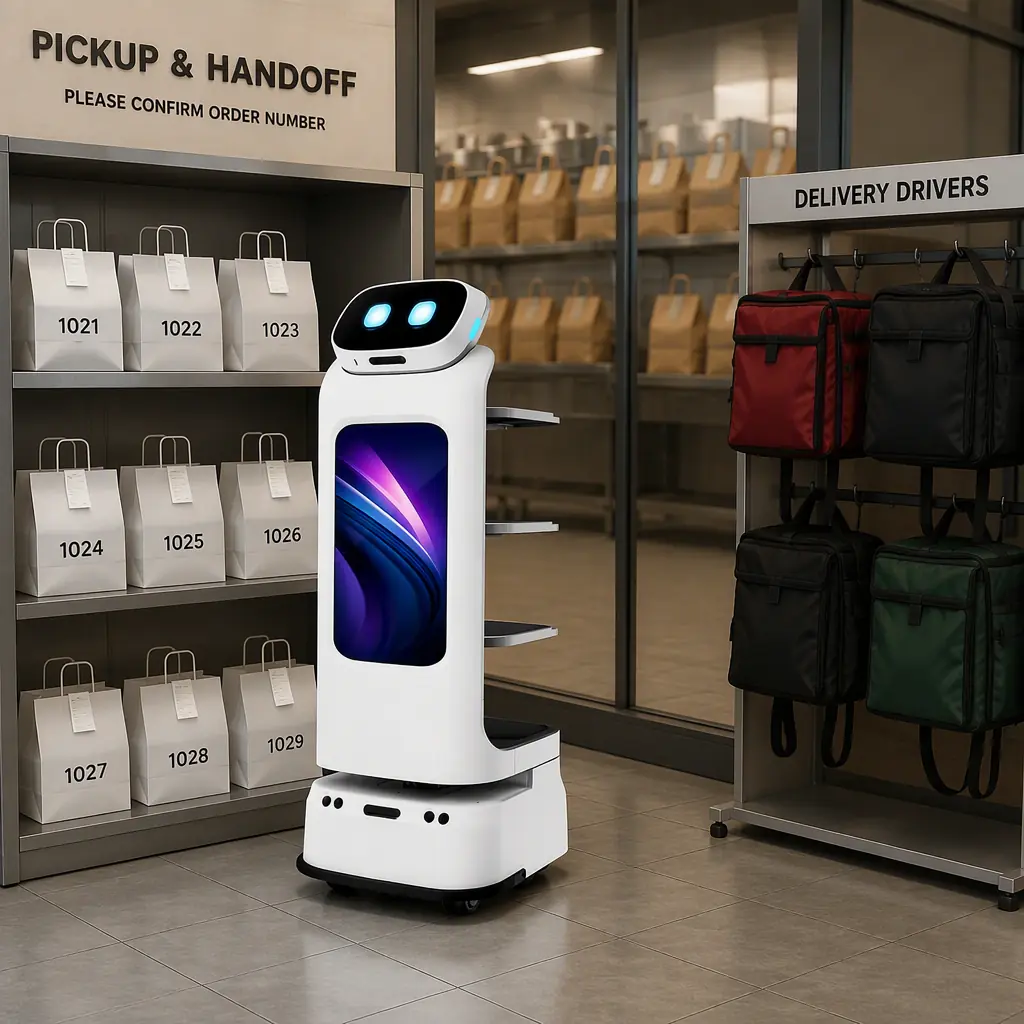
The AOMAN D1 is the order-runner. It carries up to 40 kg across separate trays, so it can move sealed order bags from the prep rack to the pickup handoff on a fixed, programmable route, freeing a kitchen worker to keep cooking instead of running the shelf. Because it runs on a schedule and its runs are timestamped in the fleet-management platform, order flow becomes predictable and traceable: which bag, which brand, which handoff, at what time.
Prep Floor Sanitation with the C2 Pro
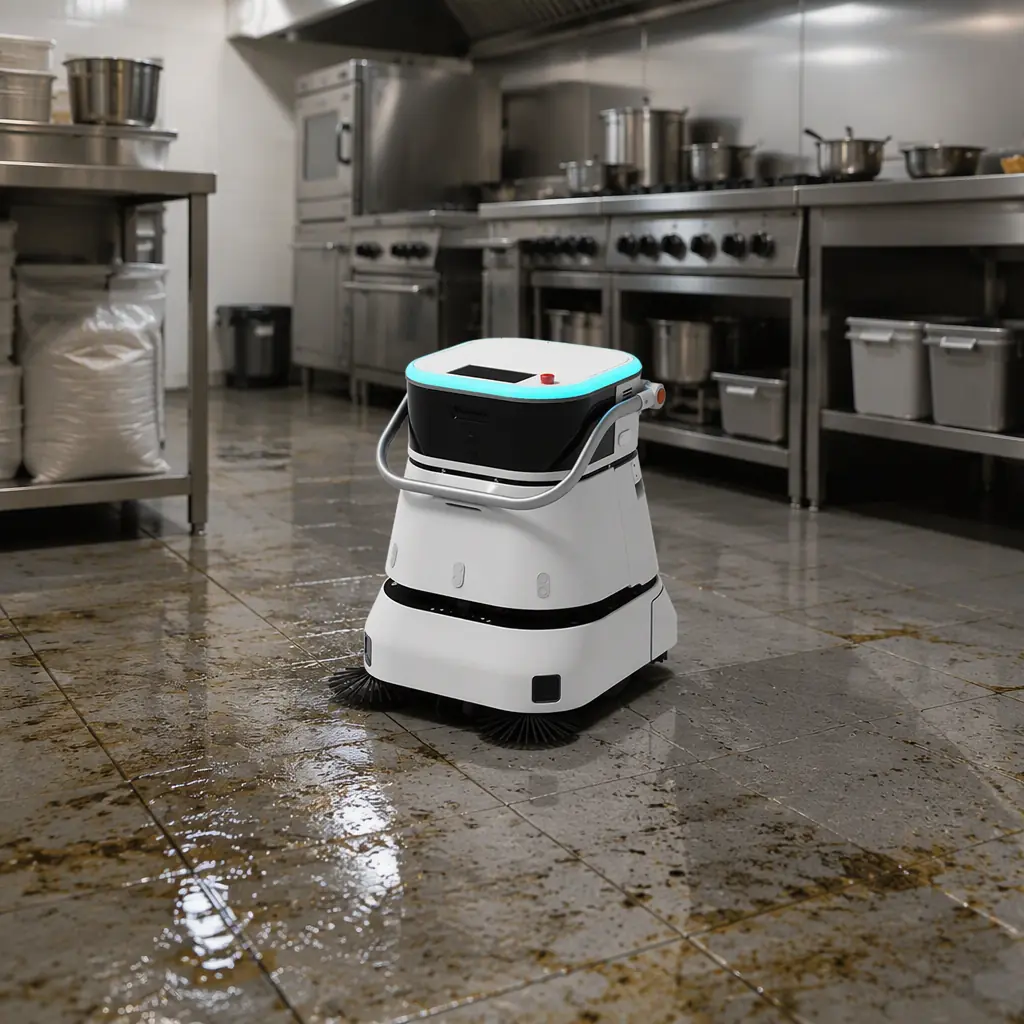
The AOMAN C2 Pro handles the floor half. Kitchen floors are unlike any other: oil spray, salt, flour, and sauce drips build into a slick film, and a mop just redistributes it. The C2 Pro runs quiet enough for a mid-service pass, its 440 mm width fits tight island kitchens, and its water-recovery separation keeps the slurry off the floor rather than pushing it around. In larger commissaries the AOMAN C1 covers up to 2,040 m²/h with a 790 mm squeegee for the main hall.
Multi-Brand Order Segregation
A cloud kitchen runs several virtual brands under one roof, and an order for brand A must never sit on the shelf next to brand B's mis-tray. The D1's separate trays let you keep brands physically quarantined on the route, and the coverage map records which brand ran where and when. For the practical design question of single- versus multi-tray compartments, the delivery robot selection guide is the right reference.
Hygiene, NSF and Floor Sanitation Protocol
| Requirement | How AOMAN Robotics Helps |
|---|---|
| NSF / food-safety floor hygiene | Documented C2 Pro cleaning cycle on a schedule |
| Slip & grease hazard | Degreaser-compatible scrub + water recovery |
| Order accuracy & traceability | D1 timestamped bag runs, brand-segregated trays |
| Peak-rush congestion | D1 frees staff from running the shelf during the rush |
| Multi-brand contamination | Physically separate trays per brand on the route |
The wider safety and regulatory framing for service robots in food service is covered in our safety standards and compliance guide; the broader kitchen deployment view is in our restaurants and food service guide.
Scheduling Around the Rush
- Run the handoff loop all day . A D1 on the prep-to-pickup route keeps orders moving without pulling a cook off the line.
- Deep-clean at the quiet window . Schedule the C2 Pro before opening or after close; run a quick mid-service pass on the cook line.
- Deploy overnight charging . Dock the units when the kitchen closes so they are ready for the first prep.
- Keep the walk-in on a schedule . A short daily run on the cold-room floor keeps condensation and ice from building.
Build-Out by Kitchen Size
- Small 2–4 brand cloud kitchen: one D1 for order flow, one C2 Pro for the prep floor. A defensible first purchase.
- High-volume commissary (8–12 brands): two D1 units on the handoff loop, a C2 Pro per kitchen island, coordinated through the fleet management guide.
- Multi-site operator: centralized scheduling and roll-out planning as described in the multi-site deployment strategy.
What to Verify Before Signing
Handoff-point clearance . Measure the pass at the pickup shelf and driver door; the D1 needs a clear route without blocking the exit. Order-bag volume . Confirm the tray count and payload against your peak bag rate. Floor slope and drains . A prep floor that runs to a drain must be cleanable without the scrubber flooding; check the drain grate rating. Chemical compatibility . Confirm wetted parts against your degreaser and floor-cleaner list. Peak-traffic timing . The robot's cycle must fit between the morning prep and the lunch rush, not compete with it. The operating cost of a kitchen floor-care unit is covered in our maintenance and TCO guide.
The ROI Picture
An illustrative 8-brand commissary spending about $47,000 a year on order-running labour and prep-floor cleaning, the equivalent of a dedicated runner plus a daily contract clean, could trade that against a D1 + C2 Pro fleet and keep headroom, while removing the rush-hour staffing problem and the one-star handoff risk. Model it on your own order volume: the recovered cook/runner time is the payroll-side saving, and the reduced slip hazard, better audit posture and faster order flow are the secondary wins that push payback under 18 months.
Ordering matters. Order flow first. It is the fastest visible win and removes the rush-hour pinch. Floor sanitation second, it is the health-code and safety foundation. Tell us your kitchen footprint, brand count and peak order rate, request pricing on a cloud-kitchen fleet and we will match unit types and routes to your commissary within 24 hours.