Restroom and Washroom Cleaning Robots, What Automation Can and Cannot Do
At a glance: A restroom is cleaned more often than any other space in the building and generates more complaints per square metre than any other space. It is also the hardest area to automate, because the work is 90 percent fixture detail and 10 percent floor. This guide separates what an autonomous scrubber does well from what still needs a human hand, gives the schedule arithmetic, and shows how to scope a hybrid route that passes a hygiene inspection without pretending the robot does everything.
Why Restrooms Resist Automation
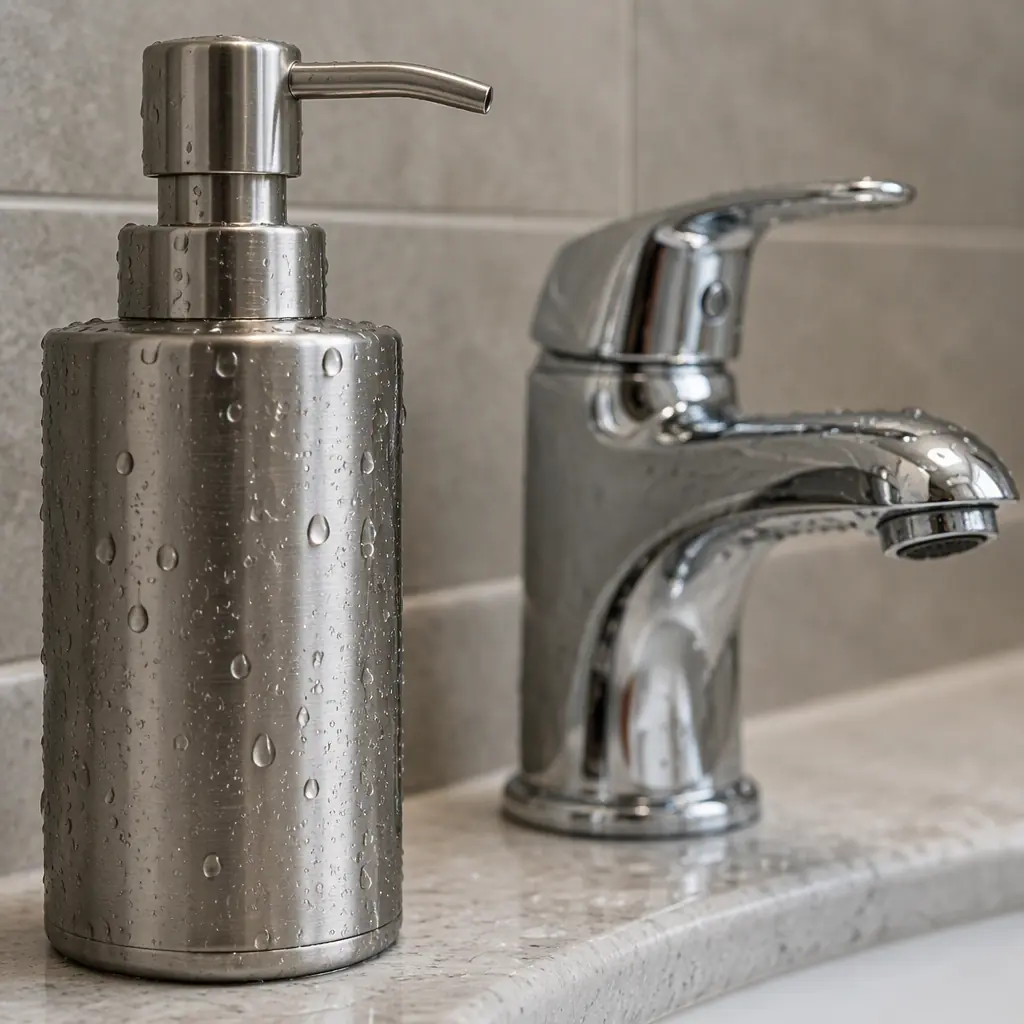
Most cleaning automation targets the floor, because the floor is the large continuous surface a machine can cover. Restrooms invert that logic. The visible dirt that drives complaints sits on flush buttons, taps, door handles, hand dryers, dispensers and the underside of seats, not on the tile. A robot that scrubs the floor beautifully and ignores the tap is not hygienically equivalent to a human, and anyone who has managed a restroom knows it.
So the honest question is not "can a robot clean a restroom" but "which parts of the restroom route can a robot take over, and what does that free the human to do". Framed that way, the answer is useful and the labour arithmetic becomes real rather than aspirational.
What an Autonomous Scrubber Handles Well
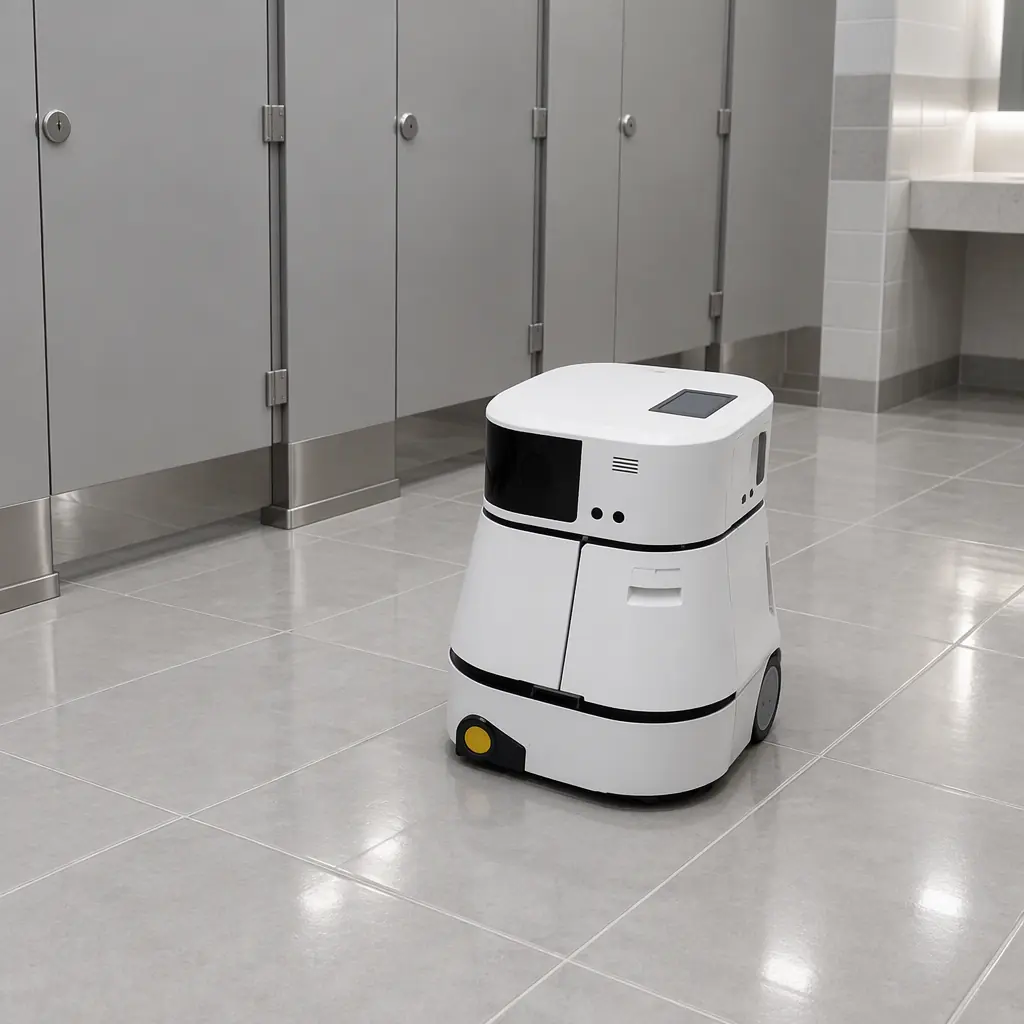
The floor and lower-wall band of a restroom is well within the capability of a compact scrubber such as our AOMAN C2 Pro, which is sized for tight, obstacle-dense spaces. The tasks below are where the machine genuinely earns its place.
- Hard floor scrubbing and recovery, including the wet-traffic zone in front of urinals and basins where soap residue accumulates through the day.
- Grout-line pre-soak and agitation on a fixed nightly pass, which is the difference between tile that reads clean and tile that reads grey.
- Under-fixture and around-bowl floor passes, the band a mop reaches poorly because of the bent posture required.
- Repeatable chemistry dosage, which removes the most common cause of inconsistent restroom results, the human guessing how much detergent went into the bucket.
- Documented coverage, because the machine logs the area it actually cleaned, which is exactly the evidence a hygiene audit wants.
The pattern is consistent: anything that is a continuous surface with a repeatable path, the robot does better than a tired human on the fourth restroom of a shift.
The Fixture Detail a Robot Still Misses
This is the section vendors skip, and it is why restroom automation projects fail review. The following tasks need hands, a cloth and a decision, and no current commercial unit does them reliably.
- Touchpoint wiping, flush handles, taps, door hardware, light switches and dispenser nozzles, which is the single most important hygiene act in the room.
- Bowl, urinal and seat cleaning including under-rim application where biofilm forms and where a spray-and-walk robot cannot deliver an effective scrubbing action.
- Mirror and chrome polishing, because streaks are read as dirt by any building occupant regardless of the actual hygiene state.
- Restocking, paper, soap and sanitiser, which is a supply task the robot cannot detect the need for.
- Odour source identification, since a persistent smell usually points to a drain or trap problem that needs a human judgement call, not another pass with a machine.
A credible deployment therefore never eliminates the restroom attendant. It removes the floor work from the attendant's shift, which is the most physically taxing and most time-consuming part, and redirects that time into the touchpoints that actually drive both hygiene scores and complaints.
The Schedule Arithmetic That Justifies the Change
Restroom cleaning frequency is normally set by occupant load and building class, not by how long the work takes. That is the opening for automation: the robot lets you raise frequency without raising headcount.
| Restroom type | Typical target frequency | Floor time per pass (manual) | Floor time per pass (robot) | Attendant time freed |
|---|---|---|---|---|
| Office floor, up to 40 users | 2x daily | 11 min | 4 min supervision | ~14 min/day |
| Retail mall, high traffic | 4x daily | 13 min | 4 min supervision | ~36 min/day |
| Airport or transit terminal | Continuous, hourly check | 12 min | 3 min supervision | ~54 min/day per bank |
| Hospital outpatient block | 3x daily plus terminal clean | 16 min | 6 min supervision | ~30 min/day |
The saving is not the whole pass. It is the recovery portion, the time spent fetching the mop, wringing it, dumping the bucket and doing the final dry. That portion is close to a third of a manual restroom floor pass, and multiplied across a building's restroom bank it is where the hours actually are. Our labour cost model shows how to convert those minutes into an annual figure your finance team will accept.
Disinfection Dwell Time Is a Specification, Not a Slogan
Any claim of "disinfection" in a restroom is meaningless without a contact time. A disinfectant needs to stay wet on the surface for its rated dwell time to achieve its log reduction, and the rated time varies by product from 30 seconds to 10 minutes. This is where robot and human differ in a way that matters.
A scrubber can apply a controlled volume of solution across a floor at a controlled speed, which makes dwell time predictable on the floor surface. A human with a spray bottle and a mop cannot hold a consistent wet time across a large area, which is why restroom disinfection claims from manual cleaning are usually optimistic. The practical rule we give facility managers is to specify the chemistry first, then confirm the robot's application rate matches the required dwell, rather than buying a machine and hoping the chemistry fits.
Specify the disinfectant and its dwell time first. Then check that the machine applies enough solution, at a slow enough pass speed, to hold the surface wet for that time. If the numbers do not meet, the machine is a scrubber, not a disinfection tool, and should not be marketed as one.
Scoping a Hybrid Restroom Route
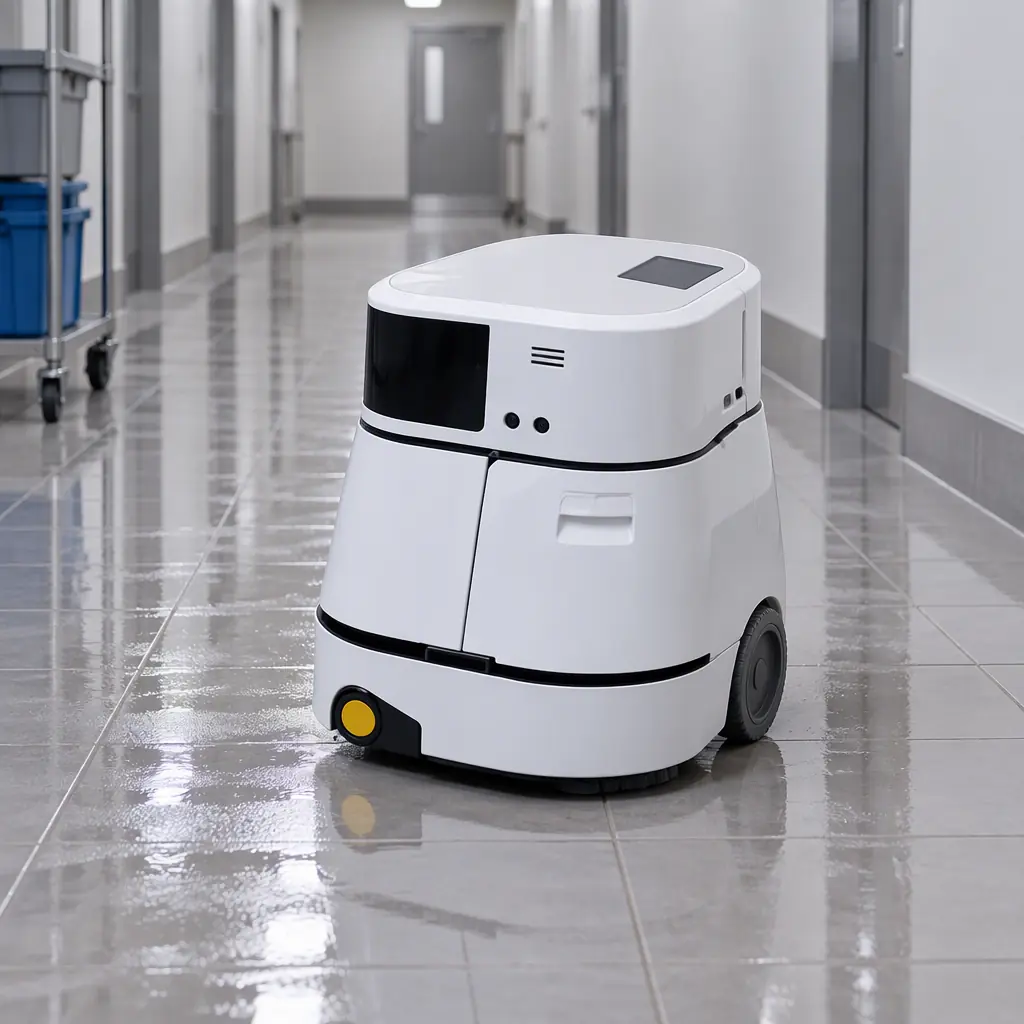
The route below is the sequence we recommend when a building moves from manual to hybrid restroom cleaning. The robot and the human work in the same room in a fixed order, so neither waits on the other.
- Step 1, robot: floor and lower-wall pass on the fixed nightly schedule, logged automatically.
- Step 2, human: touchpoint wipe in the same visit, done while the robot runs the adjacent restroom, so the two passes interleave.
- Step 3, robot: daytime spot floor pass in high-traffic restrooms between the scheduled cleans, triggered by a check rather than a full clean.
- Step 4, human: restock, mirror polish and odour check at the end of each attended visit.
Done this way, the attendant's route tightens because the floor work no longer anchors them in one room for a full pass. The same headcount covers more restrooms, and the touchpoints they were previously rushing get the time the floor work used to consume.
The Takeaway
Restrooms will not be fully automated, and any vendor claiming otherwise has not spent a shift in one. What automation does reliably is take the floor and lower-wall work, do it on a schedule with documented coverage, and hand the attendant minutes that go straight into the touchpoints that drive hygiene scores and complaints. Specify the chemistry and dwell time honestly, keep the human on the fixtures, and the arithmetic works. The room gets cleaner, not because a machine does everything, but because the person in it is finally doing the part that matters. For buildings with more than one restroom bank, the scheduling logic scales with the fleet and is covered in our guide to managing cleaning robots across multiple buildings.