
A regional hospital in Ohio evaluated two automation vendors for its supply-delivery program in early 2026. Vendor A proposed a guided vehicle system: magnetic tape laid along 1.4 km of corridors, reflective markers at every intersection, and a central dispatch controller. Vendor B proposed autonomous mobile robots — the same class of machine as the CADEBOT L100 — that simply downloaded the hospital's floor plan, navigated by LiDAR, and started delivering on day three. The hospital chose Vendor B, and the deciding factor was not the robot hardware. It was the cost of changing the route when the pharmacy moved to a new wing in June: the AGV bid quoted $18,000 and three weeks of engineering to re-lay tape and reprogram waypoints. The AMR fleet re-mapped the new route in 40 minutes, free.
That single comparison — fixed-path versus self-navigating — is the entire AGV vs AMR debate in one decision. But the choice is not always the AMR. The warehouse delivery robot guide documents environments where guided vehicles still win on paper: long, fixed, high-volume routes in controlled spaces. What most comparison articles miss is that the two technologies now serve different buildings, and the building type is the better predictor than the task type. Here is the framework we use with buyers evaluating delivery robots for hotels, hospitals, offices, pharmacies and light industrial sites.
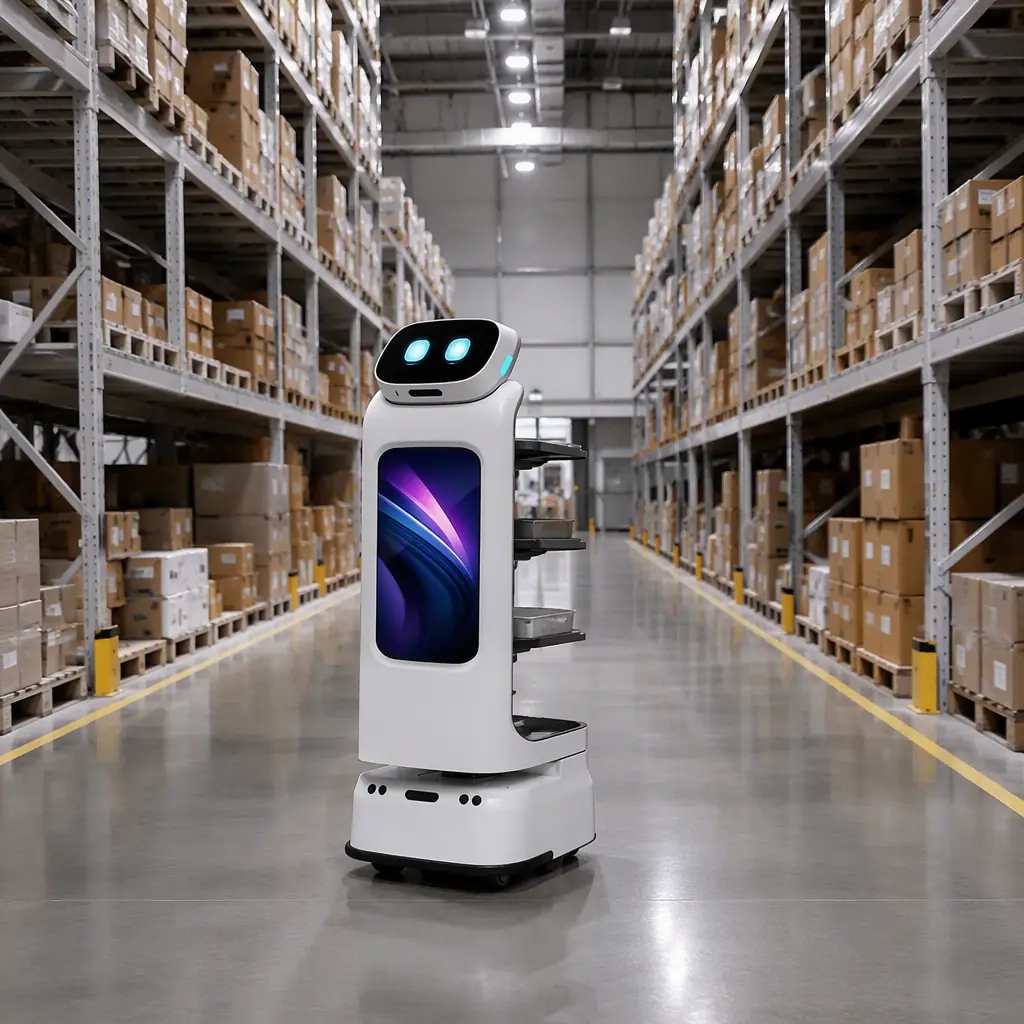
What an AGV Actually Is: Fixed Infrastructure, Fixed Route
An Automated Guided Vehicle follows a predetermined path using physical guidance: magnetic tape on the floor, reflective tape read by optical sensors, embedded wires, or QR-code grids. The vehicle has no understanding of the space around it — it knows the tape. If a pallet is left on the path, the AGV stops and waits for the obstruction to clear, because it has no ability to route around it. Route changes require re-laying the guidance media and re-programming the control software, which is why the hospital bid quoted three weeks of engineering.
AGVs remain the right answer in a specific envelope: manufacturing lines moving consistent loads between fixed stations, docks moving pallets between fixed lanes, and any environment where the route is genuinely permanent. The installed base is enormous — VDA 5050, the interoperability standard for guided vehicles, was created precisely because so many facilities run mixed AGV fleets from multiple vendors. The manufacturing service robot guide covers where fixed automation still belongs on a factory floor.
What an AMR Actually Is: Maps, LiDAR, and Re-Planning
An Autonomous Mobile Robot builds a map of the facility and localizes itself against that map with LiDAR and sensor fusion — the technology documented in depth in the robot navigation and SLAM guide. It needs zero floor infrastructure: no tape, no wires, no markers. When the hospital pharmacy moved wings, the CADEBOT L100 fleet's operator re-ran the mapping routine and the robots re-planned their own paths to the new location, avoiding the construction barriers and temporary storage that had appeared in the corridor.
The operational difference shows up in four measurable places:
| Decision | AGV (guided vehicle) | AMR (autonomous robot) |
|---|---|---|
| Navigation | Fixed path on tape/wires/markers | LiDAR + SLAM map, dynamic re-planning |
| Infrastructure | Tape, magnets, wires, markers + installation | None — map the building, deploy |
| Route change | Re-lay media + reprogram (days to weeks) | Re-map (minutes), no hardware |
| Obstacle handling | Stops until path clears | Re-routes around people, carts, doors |
| Typical use | Manufacturing lines, docks, fixed lanes | Buildings with people: hospitals, hotels, offices |
| Typical budget | $50k–150k+ per vehicle + infra | $20k–50k per robot, no infra |
The delivery robot selection guide walks through the specification sheet side of this comparison — payload, battery, cabin architecture — while this article covers the technology decision underneath it.
People Density Is the Real Dividing Line
The question that resolves 80% of AMR vs AGV decisions is not technical; it is demographic. How many people share the floor with the robot, and how often does the environment change? A dock or a production line has predictable, controlled traffic — AGV territory. A hospital corridor, hotel lobby or pharmacy aisle has unpredictable human traffic, carts, wheelchairs, spill barriers and seasonal layout changes — AMR territory.
The safety behavior difference matters here. AGVs use zone-based safety: sensors detect an intrusion into a defined zone and stop the vehicle. AMRs use 360° LiDAR obstacle detection that both stops the robot and, critically, plans around the obstacle — the behavior documented in the safety standards and compliance guide under ISO 3691-4. In a hospital corridor where a gurney can block a path for 30 seconds, a robot that waits versus a robot that re-routes is a throughput difference of minutes per delivery, every day.
Multi-Floor Capability: Where AGVs Never Went
Guided vehicles are overwhelmingly single-floor. Tape cannot climb stairs, and elevator integration for wire-guided systems is rare and expensive. AMRs, by contrast, were designed for buildings: the AOMAN DOUBLE's 420 mm width lets it enter and exit elevators without turning — a specification that matters in buildings where elevator depth is limited — and the fleet software coordinates elevator arbitration across floors. The elevator integration guide details the standards and access-control work behind multi-floor autonomous delivery.
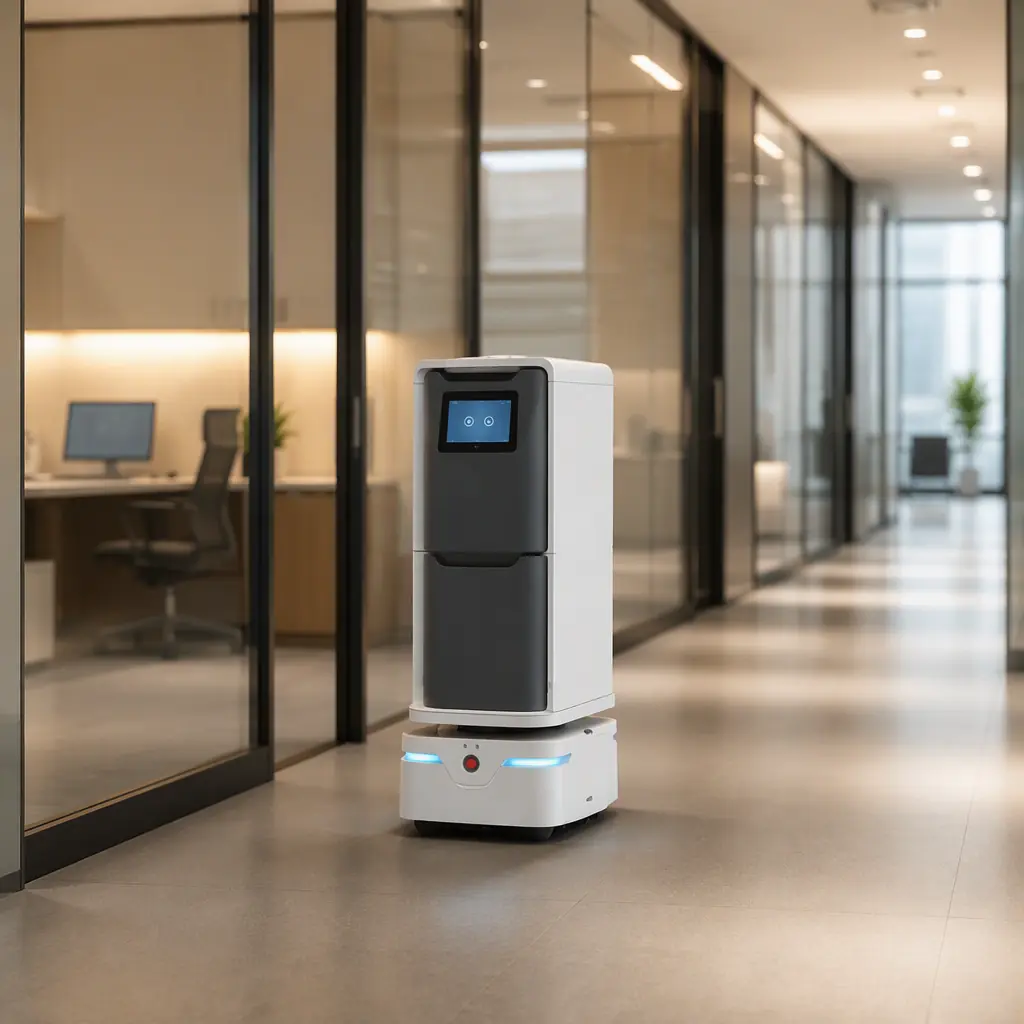
This is why the AMR category grew roughly 30% year over year through 2023–2025 while the guided vehicle market matured: the growth is not coming from warehouses replacing AGVs — it is coming from buildings that never had automation at all. Hotels, hospitals, offices and pharmacies have people, multiple floors, glass walls and changing layouts. None of those environments could ever host a tape-based system; all of them can host an AMR.
Total Cost of Ownership: The Infrastructure Line Item
The budget comparison that decides most vendor selections is not the robot price — it is total cost of ownership, and the AGV's hidden line item is infrastructure. Tape costs $3–8 per linear meter plus installation labor; markers, magnets and embedded wires cost more; the central dispatch controller adds a software license; and every route change re-triggers all of it. A 1.4 km corridor installation like the hospital's AGV quote carries $15,000–30,000 in guidance infrastructure alone, before a single vehicle is purchased.
An AMR fleet's equivalent line item is zero, and the service robot ROI guide shows how that shifts payback: an all-in deployment of two CADEBOT L100 robots covering a 15,000 m² facility at 6–8 deliveries per hour returns its cost inside 14–20 months at typical loaded labor rates of $28–38/hour — versus a guided vehicle program where infrastructure amortization alone can extend payback past 24 months. The fleet management guide covers the operating side: charging, scheduling and multi-robot arbitration behave identically for both technologies, which is why VDA 5050 is being extended to service robots so mixed fleets can share one manager.
The Decision Framework
When a buyer asks us whether they need AGV or AMR technology, we ask five questions:
- Is the route permanent? If the route will never change for five years and runs in a controlled area — AGV qualifies. If layouts, tenants or departments change — AMR.
- Do people share the space? Any meaningful pedestrian traffic pushes the decision to AMR, for safety behavior and throughput.
- Is the facility multi-floor? AMR, decisively — elevator integration is standard rather than exceptional.
- What is the real deployment timeline? AGV programs run 6–16 weeks including infrastructure; AMR fleets deploy in 3–7 days.
- What breaks the budget? If infrastructure and change-order engineering would dominate the bid — AMR removes both line items.
The hospital in Ohio made the same call most non-warehouse buyers make in 2026: the guided vehicle is a mature, proven technology for fixed industrial routes, and the autonomous robot is the technology for buildings. The AMR selection checklist in the delivery robot guide and the pilot program playbook are the practical next steps — run a two-week pilot with a real robot in the real building, and let the route data, not the marketing, decide the technology.